This is SIS Weekly .
Author: mamun
-
SIS Weekly 1: Cadillac enters F1, Wrexham valuation raises questions, Mbappe sails to another investment

Welcome to the first edition of our weekly roundup of the most notable moves in European sports business! This week, we cover the frenzy over Wrexham’s supposed hundred-million euro valuation, the expansion of Kylian Mbappe’s budding investment portfolio, and Cadillac’s much-awaited industry to Formula 1.
The Sport Investment Studio is an investment and advisory platform dedicated to transactions a the intersection of Sport, Media and Entertainment based in Paris.
Bedlam in Wrexham: €100 million valuation cited, but many questions asked.
🏴 What: A Bloomberg report claims that Ryan Reynolds and Rob McElhenney’s Wrexham AFC are now worth a whopping 100 million euros, a number unheard of in the English third tier, where they ply their trade. Given that the club was bought for around 2 million euros three years ago, this possible return on investment is raising lots of eyebrows.
💰 Why: News of the valuation comes from the purchase of a 15% stake in the club by the New York-based Allyn family. Though exact details of the stake are undisclosed, they reportedly put the club’s valuation at €100 million.
Unsurprisingly, the supposed valuation has raised some questions. This is very well illustrated by sports finance professor Rob Wilson, who argues that despite having strong financials (revenues touching 20 million pounds) and a solid brand, Wrexham are still a loss-making club in a league where money simply isn’t that easy to come by. The club lost 5 million pounds last year, and has 9 million pounds in long term debt, so it’s not as if its financials are ironclad.
📰 Read more:
-
The original Bloomberg report on Wrexham’s valuation (Bloomberg)
-
Prof. Wilson’s analysis on the valuation (Invest In Soccer)
-
A great overview of how finances work in the English Football League, away from the glitz and excess of the Premier League (Deloitte)
Cadillac finally joins Formula 1
📺 What: After years of deliberation, General Motors has finally received the nod to enter Formula 1, through Cadillac. Cadillac will be on the grid starting 2026, and aims to be a powertrain producer by the end of the decade.
🤔 Why: Formula 1 has established itself as one of the properties in sport, with team valuations, media rights and fan interest all soaring over the past few years. For an automaker, there is no greater marketing ploy than having two cards on the coveted F1 grid, and America’s grand old car manufacturers have been trying to get in on the action for a while now.
Entry was by no means cheap. GM had to pay a fee of over $450 million to enter the grid, a number that is twice as high as usual anti-dilution fees. The entry also comes at a key time for the American car industry as a whole. Faced with competition from China and falling behind other auto giants on the global level, it needs to reinvent itself, and this could be a valuable step in doing that.
📰 Read more:
-
The FIA’s official press release on Cadillac’s entry into F1 (Formula 1)
-
A report on soaring valuations in Formula 1 (Sportico)
-
An overview on why exactly General Motors have wanted a Formula 1 team for so long (The Race)
Kylian Mbappe invests in French SailGP team, adds to investment portfolio
📺 What: Kylian Mbappe, through his Coalition Capital venture, has become a co-owner of the French SailGP team. This marks his second investment in professional sport, following the acquisition of Ligue 2 team SM Caen. The stake has not been disclosed, but is said to be ‘significant.’ Mbappe’s charity fund, Inspired by KM will also become a sponsor of the team.
🤔 Why, and what is Sail GP?: Founded in 2019, SailGP is supposed to be water motorsport’s answer to Formula 1. A competition consisting of sailboat races in high profile cities, the league has expanded rapidly since its founding.
Originally, the league’s competing franchises were owned by the league itself. However, there has been a drive to sell off these teams to interested investors, and it has gone quite well. Only four of the 12 teams are now in league hands, with one of them being the French team that Mbappe has acquired a stake in.
SailGP has been expanding quickly, and with the wealth of the rich growing rapidly over the past five years, there is definitely room for another HNWI-centric sports property in the market. The boat-racing E1 series is another example of this; backed by the Saudi PIF and with a laundry list of celebrity investors. This makes the investment a smart one for Mbappe, due to the opportunity to get in early on what is potentially the next big motorsport.
📰 Read more:
-
A primer on SailGP and how it works (SailGP)
-
An overview on Mbappe’s business interests and his stake in the French SailGP team (New York Times)
-
A great overview on SailGP’s business prospects and recent investments in it (SportsPro)
Other headlines to keep an eye out for:
-
The Monarch Collective, a flagship $150 million fund for investments in women’s sports, has expanded its size to $250 million, buoyed by continually optimistic sentiments around women’s sport. Led by venture capital heavyweights Kara Nortman and Jasmine Robinson, the fund counts a number of key American franchises in its portfolio. These include NWSL franchises San Diego Wave and Angel City FC (which is touted to the world’s most valuable women’s sport franchise), as well as the incoming Boston entry into the NWSL. Read more
-
Sponsorship is not just about putting logos on shirts, apparently. The European sponsorship market is now valued at a record high of €23 billion, crypto firms are back in business (although let’s see how long that lasts), and with new properties popping up in both traditional and new sports, interest will only increase. However, this consequentially also means that saturation will increase, and companies will look for new ways to monetise and promote themselves. Some properties, like Formula 1 have understood this, and there are definitely some pioneers among Europe’s elite too. Take Juventus for example, who are now championing space exploration and sending themselves to the moon, along with American space agency Lunar Outpost.
-
It’s Christmas. UEFA’s annual European Club Finance and Investment Landscape report has dropped, and as ever, it is replete with tons of digits that populate newsletters like ours. Annual revenues have hit another record, but the industry still makes a considerable loss. Broadcasting is now second to commercial revenue, and has only grown 3% in the past 5 years. PSG (3) and Marseille (20) were among the top 25 clubs by revenue, all forms of income bar broadcasting were up, and UEFA incomes as well as proceeds from transfers have kept the league somewhat competitive. However, Ligue 1’s wage-ratio is the highest of the top European leagues, 2 of the 10 highest operating losses out of all European clubs were attributed to PSG and Lyon, and the league’s net operating result is the worst in the continent.
That’s all for our inaugural weekly roundup! For more content, follow us on LinkedIn, and if you’re interested in learning more about us, please visit www.sportinvestmentstudio.com
-
-
SIS Weekly 2: Sportradar acquires IMG Arena, Ligue 1 relies on McDonald’s for viewers, and the Celtics are sold for an American record.
Welcome to the second edition of our weekly newsletter on sports investment. Thank you for your wonderful reception to our first piece, we’ve taken your feedback into account and will keep improving our work. This week, we have a diverse platter for you: we’ll talk about golf, cricket, football, betting, basketball, and tennis!
The Sport Investment Studio is an investment and advisory platform dedicated to transactions a the intersection of Sport, Media and Entertainment based in Paris.
Data giant Sportradar acquires IMG Arena, gains access to key betting rights.
💵 What: Sportradar, the premier data provider and aggregator for most major European sports entities, has agreed to buy IMG Arena, and its constituent betting rights portfolio. In what looks to be a remarkable deal for Spotradar, it is in fact Endeavor that has paid them $225 million to acquire the property.
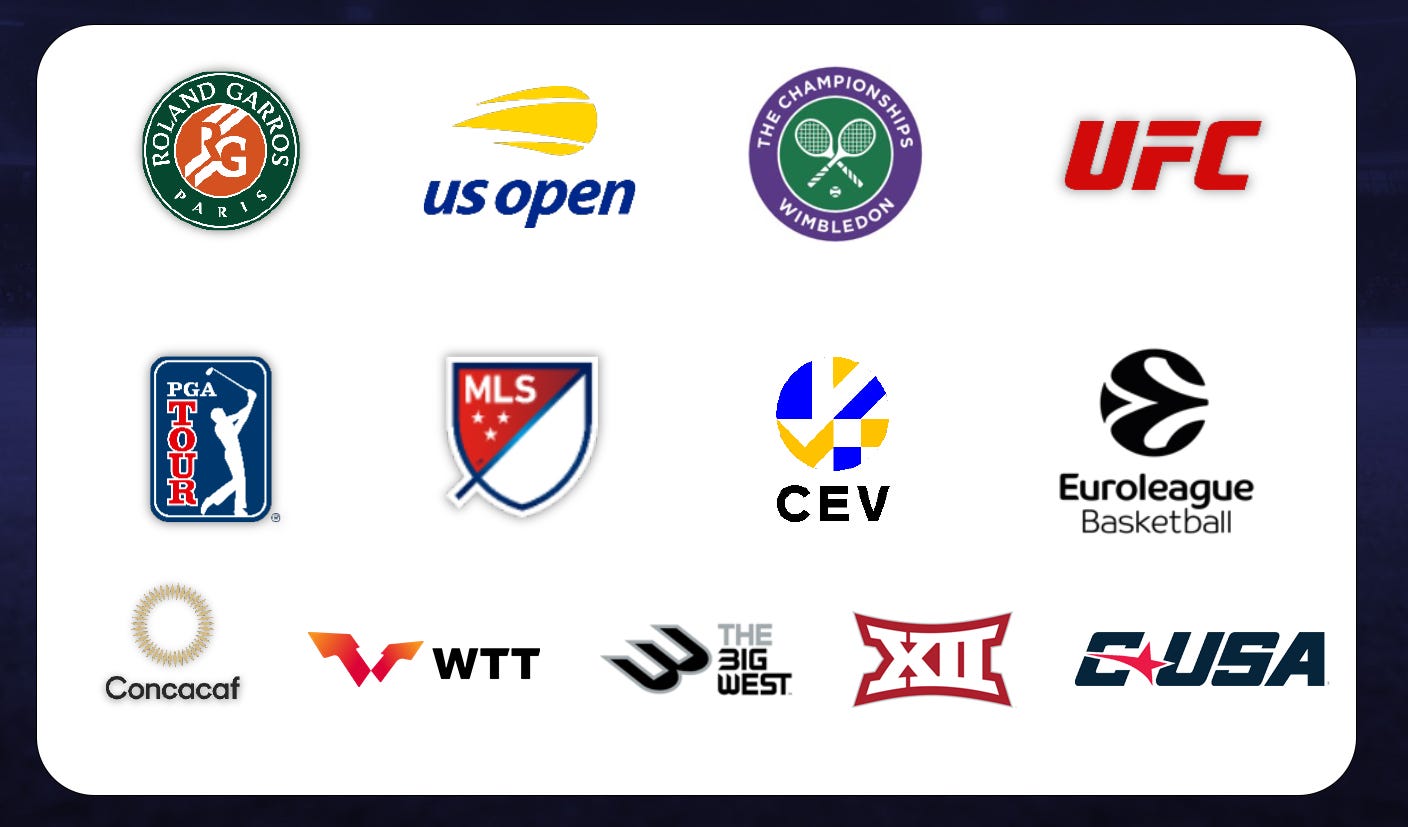
The list of key properties that Sportradar has now acquired the betting rights to (Sportradar) 🤔 Why: A key part of Sportradar’s business involves measuring and packaging data so that it can create odds for bookmakers. It also sells a variety of other services to bookmakers, and assists sports federations and leagues with both anti-corruption, and even broadcasting services. Thus, this deal, which gives the company access to 70 major sports rightsholders and 30,000 discrete streaming events, will further consolidate its ability to package and sell unique products to its clients.
For Endeavor, the IMG Arena portfolio had become something of a white elephant, as they had paid far more than what they could leverage out of the rights they held. However for Sportradar, this is their key competence, and they’re confident that they can turn a profit on the rights they now hold. The company’s EBITDA stood at a solid $240.9m last year, and these numbers are now likely to get another boost.
📰 Read more:
-
All the information on Sportradar’s acquisiton of IMG Arena’s betting portfolio (Sportradar)
-
Details on the deal itself, and on IMG’s troubles entering data distribution (Sport Business Journal)
-
A November 2024 story on Endeavor’s long struggle to sell IMG Arena. (Sport Business)
Boston Celtics sold for an American record fee of $6.1 billion, owners net 1,700% return.
🏀 What: Reigning NBA champions Boston Celtics have sold a 51% stake in the team to local businessman Bill Chisholm at a valuation of $6.1 billion. Private equity firm Sixth Street will also be among the buying party, and have spent around a billion dollars on their end. Existing CEO and Governor Wyc Grousbeck will remain at the helm of the team management until 2028, and is hoping to sell the rest of the franchise at a $7 billion valuation. This is now the largest sale of a sports team in American history.
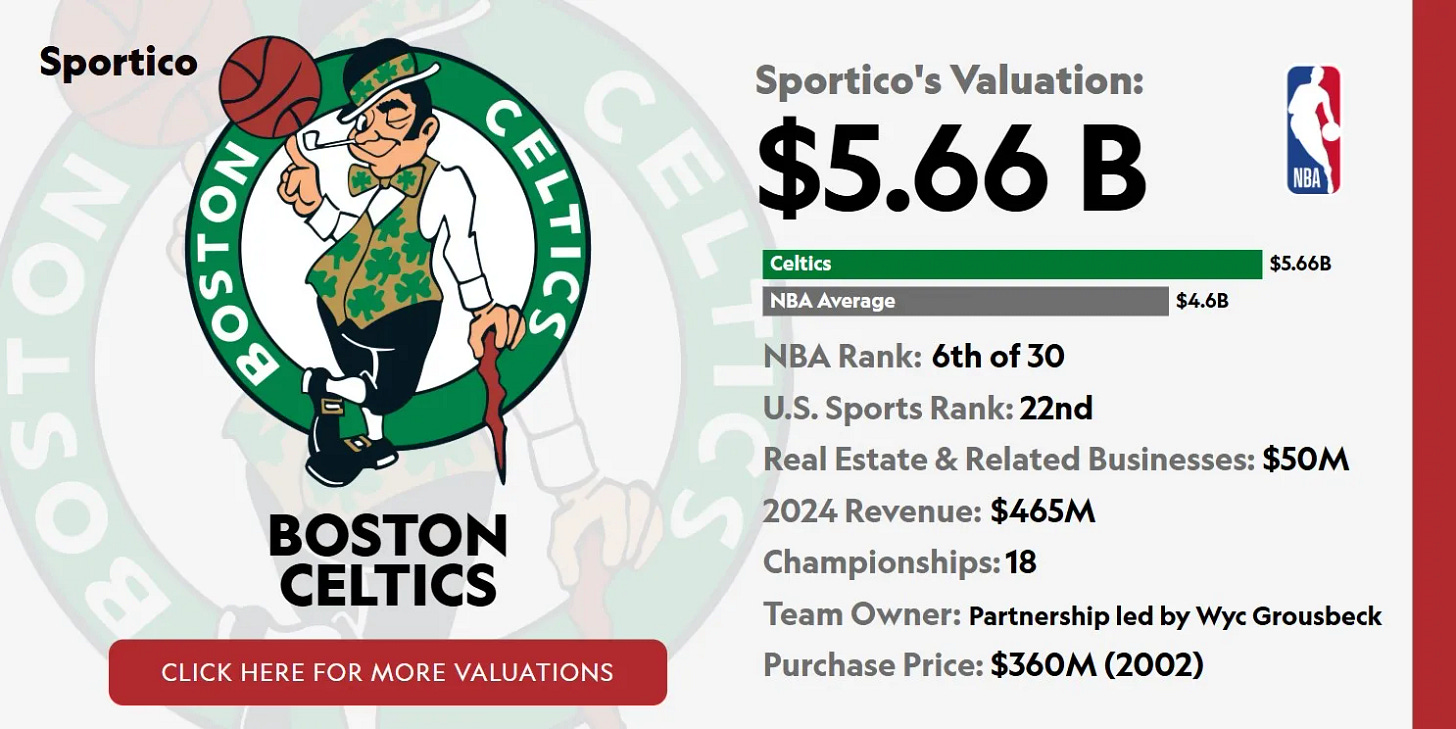
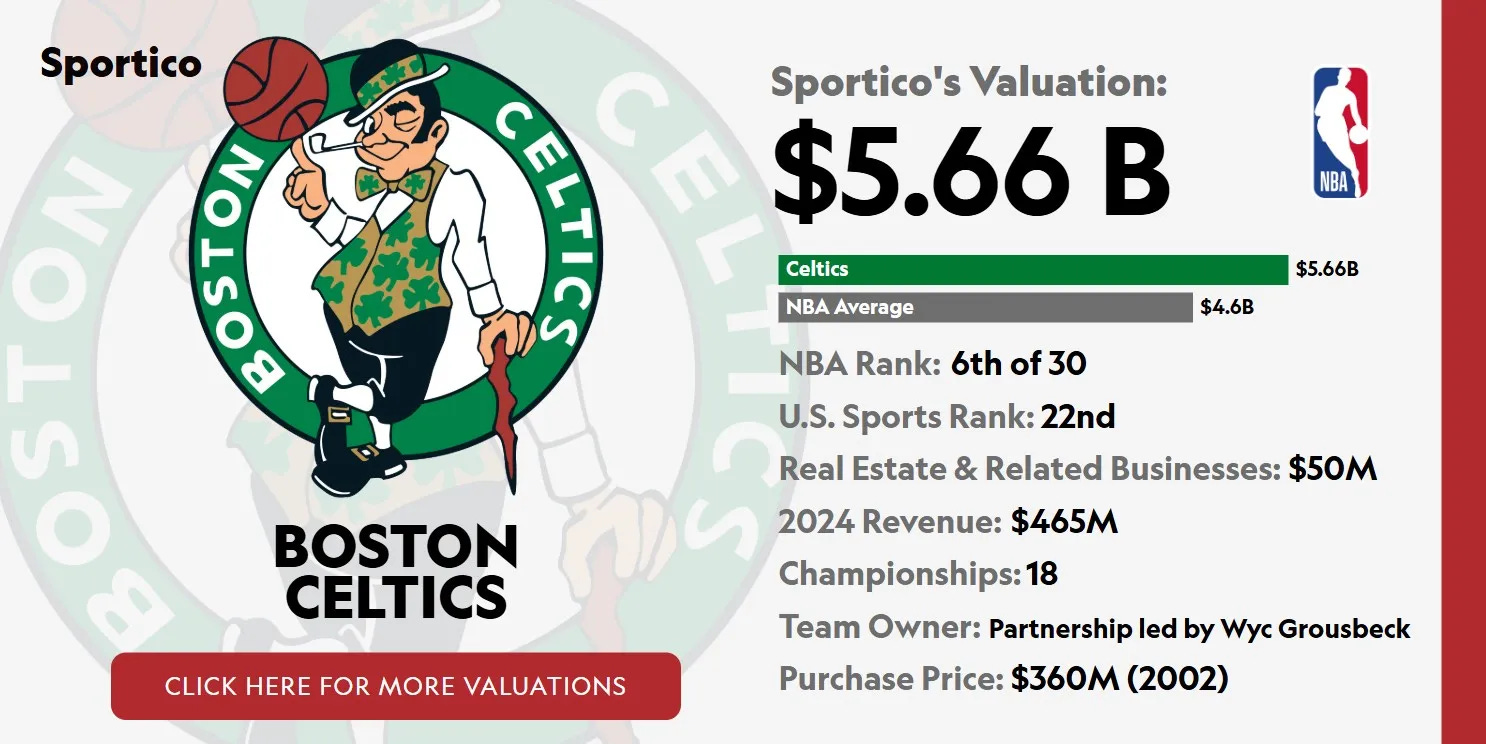
Sportico’s valuation of the Boston Celtics. 🤔 Why: The Grousbecks had bought the team for $360m some 23 years ago, when the ownership landscape of American sport was very different. Valuations and revenues have skyrocketed since then, and understandably, the Grousbecks now feel that they’ve made a good return on investment.
For Chisholm’s consortium, the incentives are multi-fold. Players like Sixth Street want to expand their footprint in US sport, while Chisholm himself is a lifetime supporter of the Celtics. The sale also comes at a crucial time for the Celtics, who despite being champions, could be forced to trim their payroll due to the NBA’s rules on collective bargaining and its luxury tax. This is of course, at odds with the team’s competitive balance. However, despite all the question marks and thinkpieces, one thing is clear: the NBA’s allure is alive and well, and this valuation is a massive testament to that.
For the NBA, the valuation will help fund a much-awaited expansion, and that in turn will lead to an even bigger pool of money in the system.
📰 Read more:
-
The facts and details surrounding the deal. (Sportico)
-
Forbes’ wonderful overview on who exactly Chisholm is, and his rise to the top. (Forbes)
Buy a meal, get a Ligue 1 subscription: DAZN and McDonald’s combine in desperate play to gain viewership.
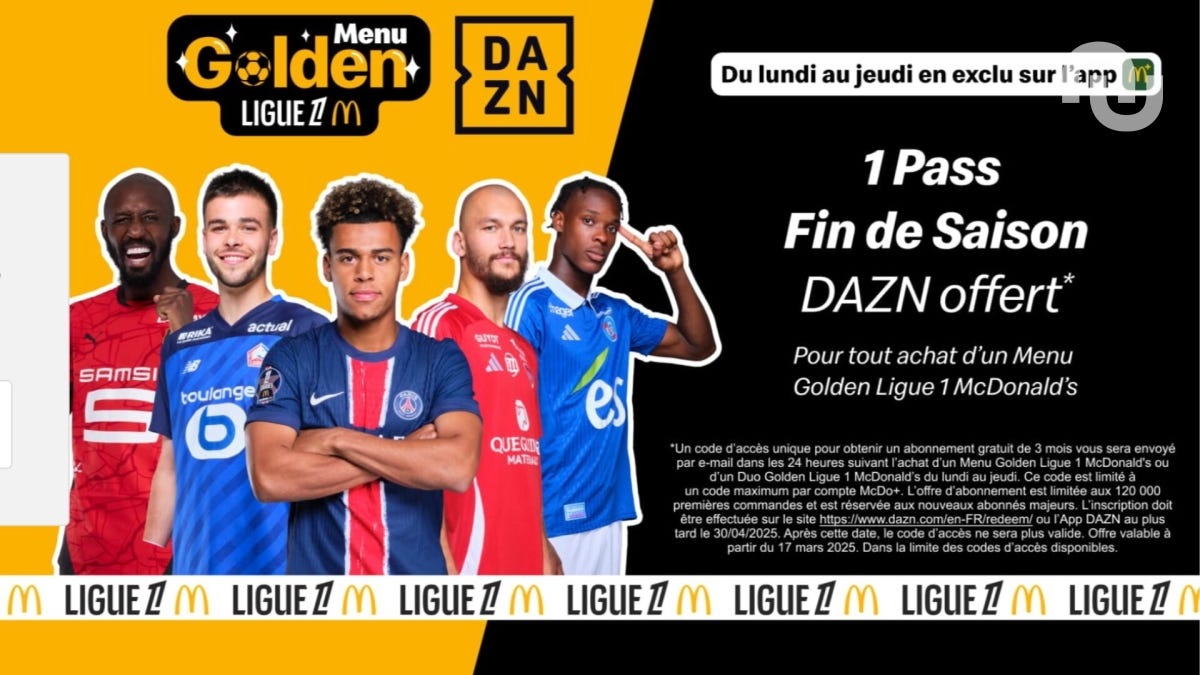
📺 What: DAZN, the Ligue 1’s primary broadcaster, combined with title sponsor McDonald’s to come up with a special offer: the first 120,000 people who ordered a 15 euro meal on the app would gain access to a Ligue 1 subscription on DAZN until the end of the season. Given that a monthly subscription for the league usually sells for 40 euros, this is quite the steal, and quite the devaluation of what is supposed to be one of the best football leagues in the world.
🤔 Why: DAZN’s struggles to attract an audience to its Ligue 1 broadcasts is no secret. It aimed for 1.5 million subscribers by the end of the season, and up until a couple of months ago, only had around a third of that. It withheld payments worth €35 million to the league in January, which then led to the league taking them to court. This stoked fears of a complete contractual collapse. Those have been allayed for now, but the league and broadcaster have had to come up with increasingly desperate ways to sell the league as it approaches the business end of the season. For example, Le Classique between Marseille and PSG was shown live in IMAX cinemas around France at a price of 20 euros per ticket.
That has now been followed up with this deal, which equates France’s premier football league to a burger, coke and some fries. Unsurprisingly, many have seen the programme to be a mockery of French football. However, the league’s leaders have defended the deal, citing that its immediate success, and the potential such hype marketing holds in reviving interest in the product, if only for hype value. The offer has worked because it is so cheap, but is that really a good thing for Ligue 1’s long term prospects, and its perceived value?
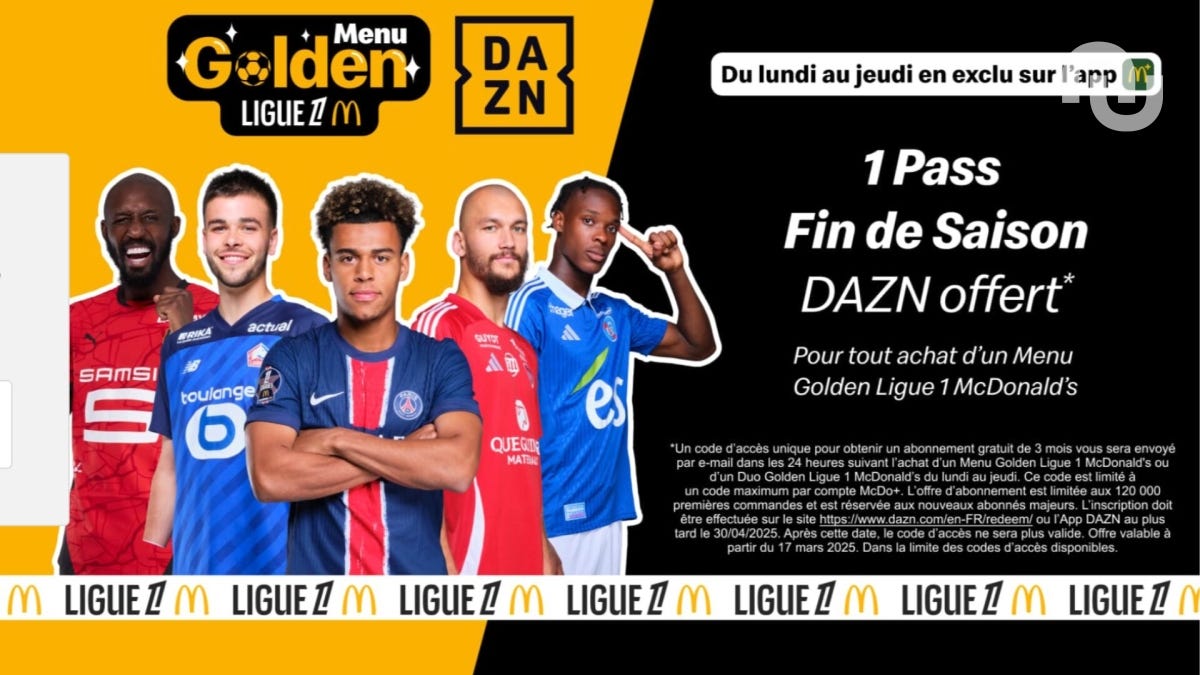
The (in)famous offer. (DAZN/McDonald’s) 📰 Read more:
-
Le Parisien’s inside view on what prompted the deal between the two parties, and evidence that despite public ridicule and skepticism, it might yield successes for the league. (Le Parisien)
-
Some more details on DAZN and McDonald’s unlikely partnership, with hints that there may be more such stunts soon. (RMC Sport)
-
An overview on DAZN and Ligue 1’s recent squabbles, and signs of possible reconciliation. (Le Figaro)
Other pieces of news that interested us:
-
Hedge fund titan Bill Ackman, and a number of tennis superstars, including Novak Djokovic, are suing tennis’ governing bodies over boiling concerns that professional tennis players are overworked and grossly underpaid. Commercial revenues, especially in the Grand Slams, have been skyrocketing, but players believe that their prize money has remained somewhat stagnant. (Financial Times)
-
The 18th edition of the Indian Premier League, the world’s most valuable cricket league, has kicked off. Also the second most valuable sports league in the world after the NFL on a per-match basis, the two month event is a national phenomenon in India. Read more on the league’s skyrocketing team valuations, and the institutional investment they are now attracting. (Houlihan Lokey)
-
Good Good Golf, a trailblazing American golf media company and lifestyle brand, has secured $45 million in funding from high-profile investors including Peyton Manning, Sunflower Bank and Manhattan West Private Equity. It’s hard to compartmentalise the brand into one domain of activity, which makes the project all the more interesting. They have nearly 2 million subscribers on YouTube (largely thanks to light-hearted golf challenges), have a budding clothing brand, and are now organising live golf events of their own. (Good Good Golf)
That’s all for this week! For more content, follow us on LinkedIn, and if you’re interested in learning more about us, please visit www.sportinvestmentstudio.com
-
-
Sports Investment Newsletter 3: NBA Europe is happening; QSI and Fenway compete to acquire Malaga, and boxing gets a new league.
Welcome to another edition of our weekly newsletter on sports investment. It’s been another eventful week, and once again, we have a diverse slate of topics lined up for you. The NBA looks all set to enter the European market soon, alternative football leagues such as the Baller League and Kings League are making waves across the continent, and a new challenger is emerging in professional boxing. All this, and much more awaits you in this edition.
The Sport Investment Studio is an investment and advisory platform dedicated to transactions a the intersection of Sport, Media and Entertainment based in Paris.
FIBA and NBA to explore a new European basketball league.
🏀 What: The NBA and FIBA (basketball’s governing body) have agreed to explore the feasibility of a new, 16-team league in Europe that would involve some of the continent’s most notable sports brands, and could end up rivalling the existing EuroLeague.
🤔 Why, and what would it look like?: The NBA and FIBA have both long held an interest in creating a European equivalent of the former, with the belief being that basketball in Europe has yet to reach its commercial potential. The EuroLeague has also been tapped for a potential merger, but has insofar rejected any such proposal.
NBA Commissioner Adam Silver wishes to build a 16-team league with both existing and new entrants; PSG owners QSI have already reportedly expressed an interest in a new franchise, whereas rumours say that the likes of Real Madrid, Bayern Munich and the Tony Parker led LDLC Asvel could be interested in defecting to the new league.
If it materialises, the league could seriously threaten the EuroLeague, which despite growing interest, would struggle to compete with the financial and commercial might of the NBA.
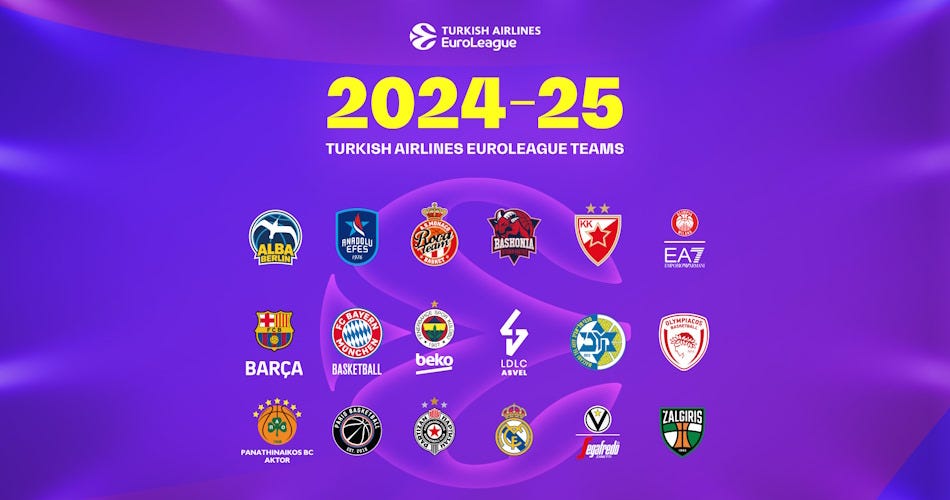
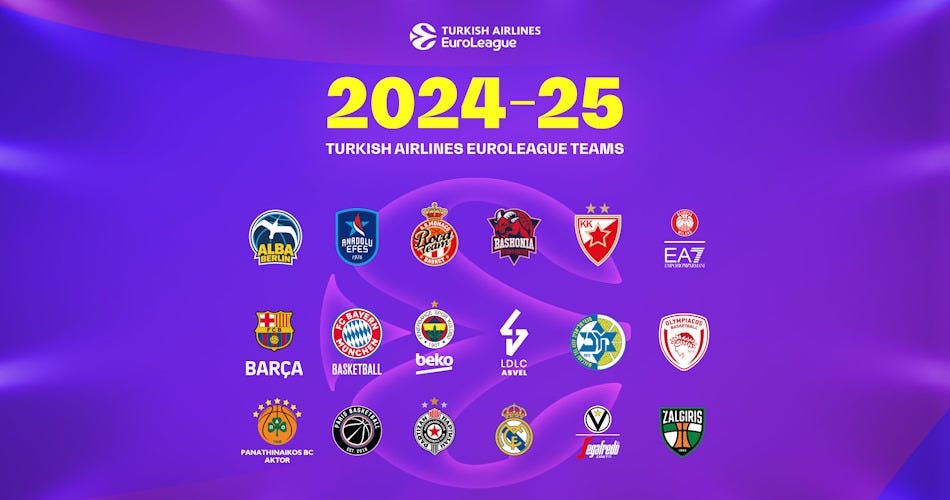
The existing composition of Europe’s premier international basketball league, the EuroLeague. Some members are rumoured to be interested in defecting to the new NBA-led league, although this will be quite tricky. (EuroLeague) 📰 Read more:
-
Commissioner Adam Silver’s thoughts on a new European league, and other hot topics in the NBA. (NBA)
-
An overview on what the league might look like, who might join, and on potential tip off dates. (The Athletic)
-
A good, short read on the impact this might have on the existing European basketball ecosystem, and in particular, the EuroLeague. (Eurohoops)
Deloitte’s report on women’s sports applauds soaring numbers, calls for long-term value building.
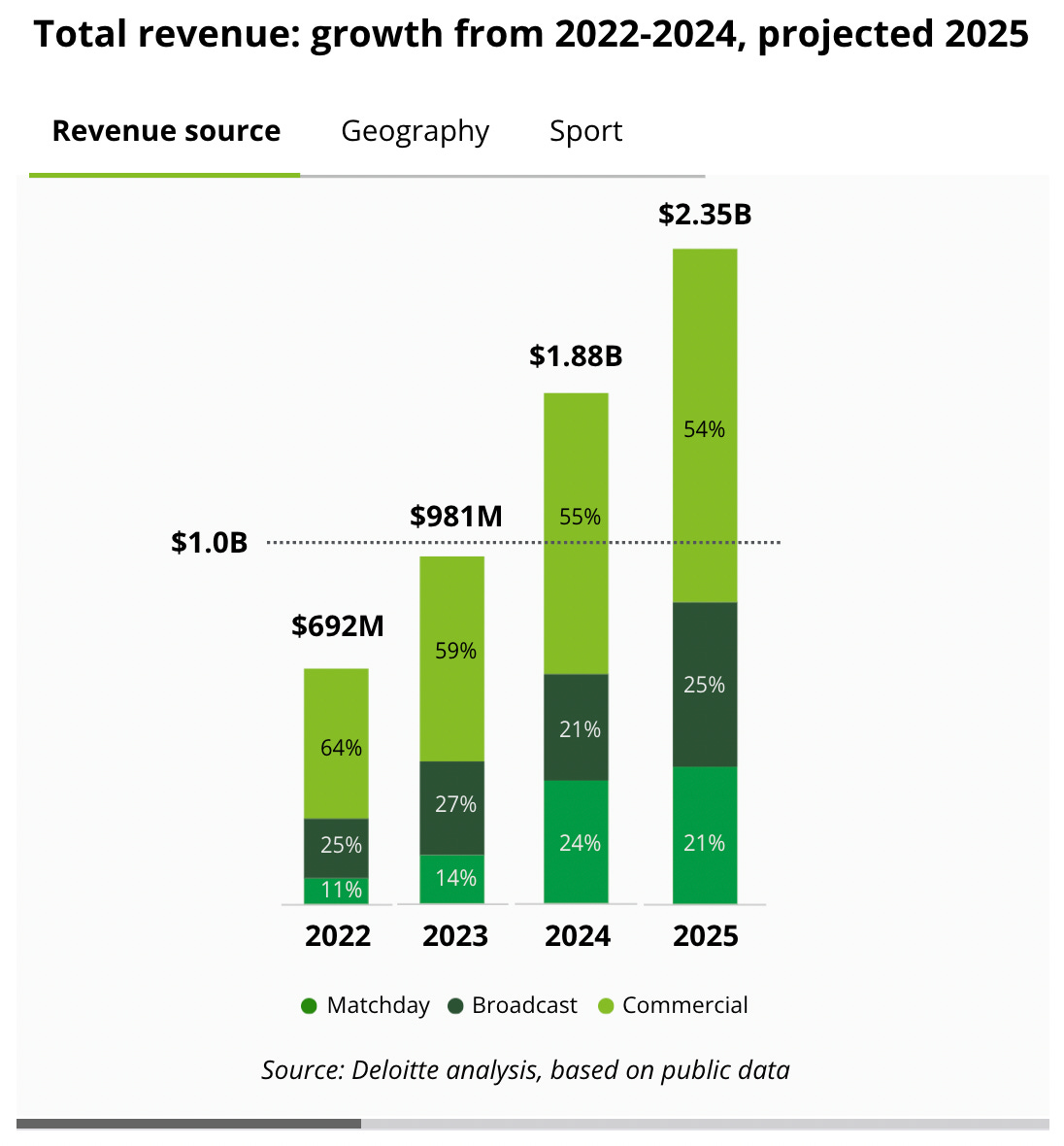
👧 What: A new Deloitte report on women’s sports has highlighted skyrocketing growth, with annual revenues now at over $2.35 billion, nearly thrice of what they were in 2023. North America remains responsible for the majority of this, and for the first time, basketball has overtaken football in revenue generation, largely thanks to the WNBA. The report also provides insights on how the industry can see sustained growth and value-building over the next decade.
🤔 Why, and what’s next: Reasons are both social and economical. For one, pay, access and infrastructure in women’s sport is increasing, thus improving talent pools and inevitably, visibility and investment.
Secondly, commercial potential is finally coming to the fore. Brands as high profile as Louis Vuitton, Dior etc. are realising that there are superstars to be found in women’s sport, and an increasing number of fans in team sports are citing the likes of WNBA star Caitlin Clark, Ballon D’Or winner Aitana Bonmati and Indian cricketer Smriti Mandhana as inspirations. This is leading to more people attending and watching women’s sports events, which in turn increases media coverage, and democratises audiences, as is most notable with the WNBA’s 165% increase in viewership from 2023 to 2024. What is also promising is that these trends are not limited to certain geographies and sports. Women’s volleyball and pickleball leagues are racking up large valuations, Japanese football teams are in the top 20 when it comes to revenue, and the Indian Women’s Premier League is bringing the same level of wealth and fame to women’s cricket as the IPL did to the men’s game 18 years ago.
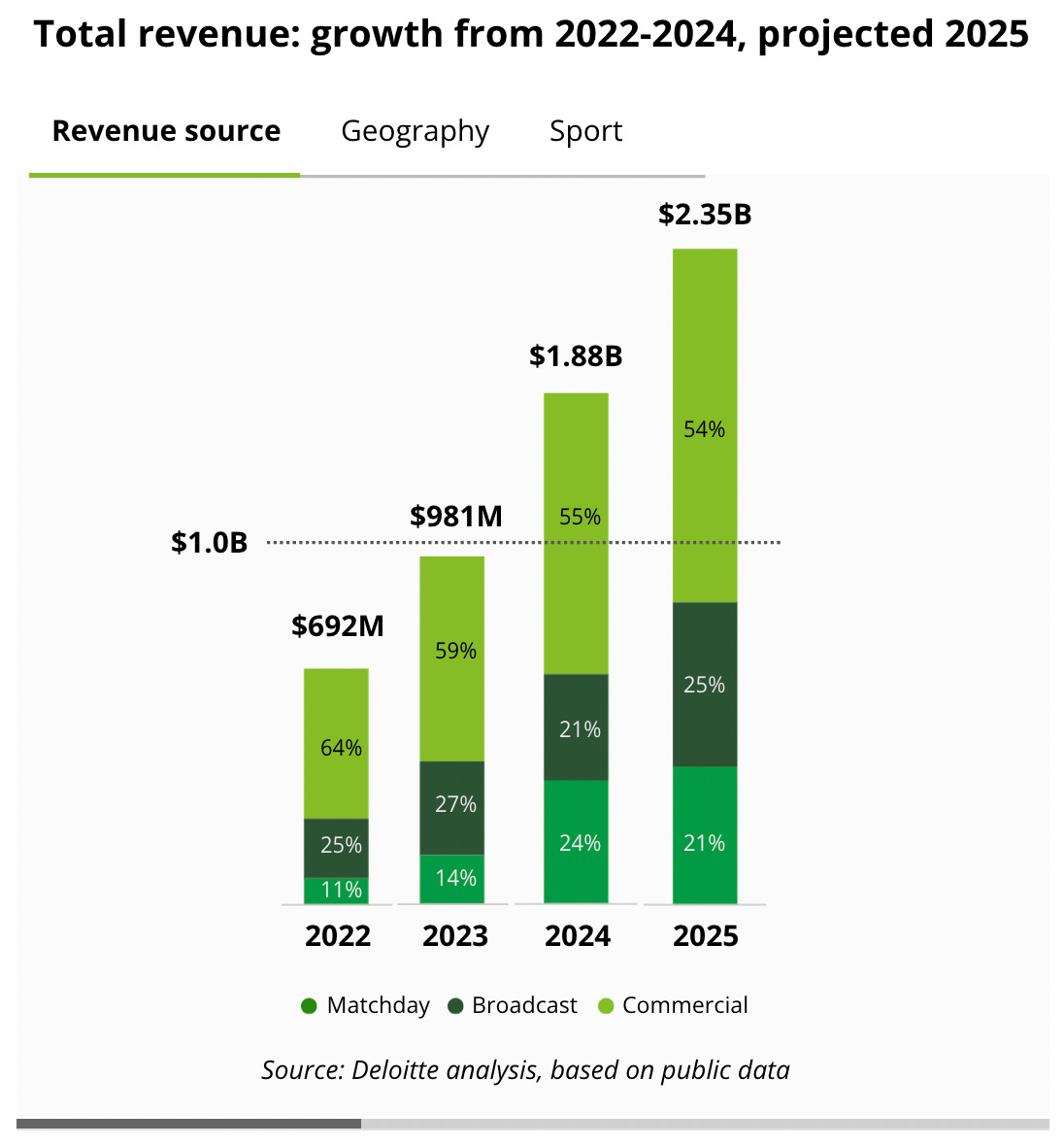
A snapshot from Deloitte’s report, highlighting exponential revenue growth in women’s sport. 📰 Read more:
-
Deloitte’s report. (Deloitte)
-
An op-ed from Maria Sharapova on the potential women’s sports has from a commercial perspective, particularly for adjacent industries such as fashion and media. (Business of Fashion)
-
An article highlighting persistent structural and institutional flaws in women’s sport that might prevent it from growing holistically. (The Guardian)
Baller League kicks off in the UK, and Olympique de Marseille partner up with the Kings League.
📺 What: The UK version of the Baller League, an alternative six-a-side football league kicked off last week. The first matchday, which consisted of six games, was broadcast both on Sky Sports UK and YouTube, and racked up over a million cumulative views on the latter. Across the channel in France, Olympique de Marseille announced an official collaboration with Adil Rami’s Kings League team, further adding to the credibility that these new leagues are garnering.
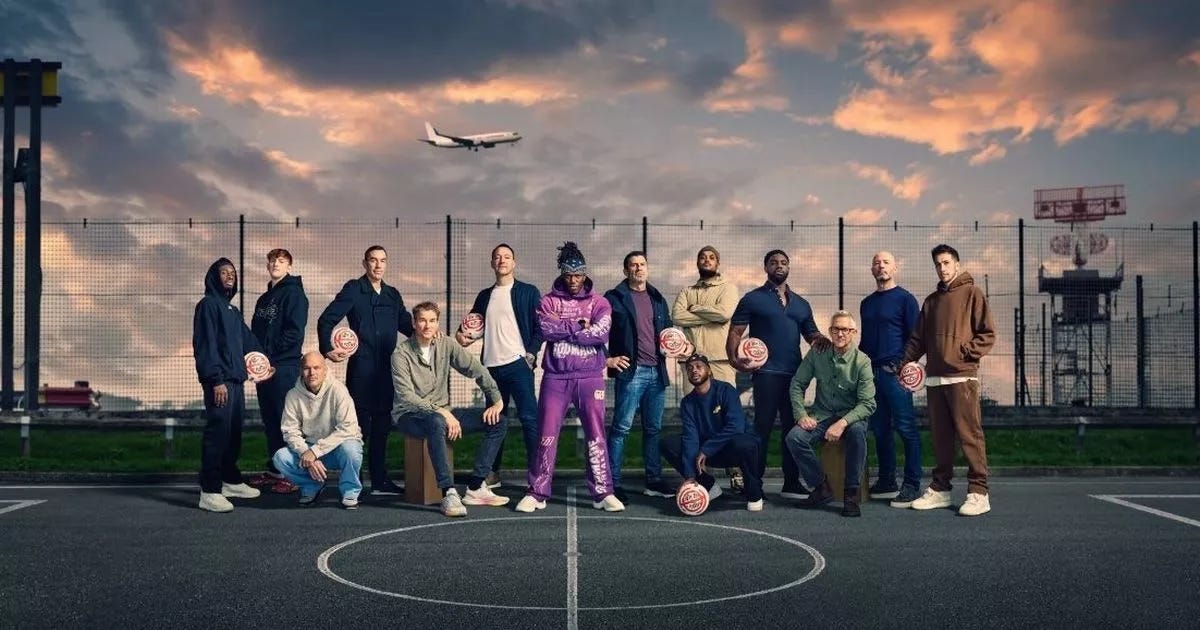
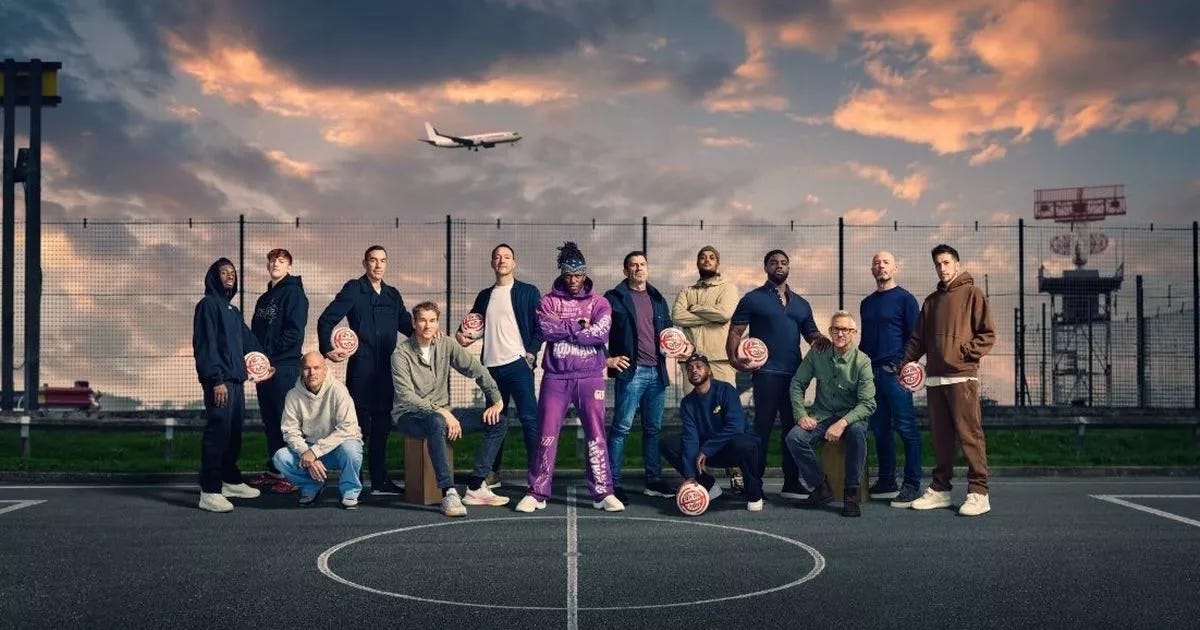
The Baller League UK’s lineup of coaches and owners is a who’s who of British entertainment. Some of those involved are ex-pros Gary Lineker, John Terry, Luis Figo, rapper Santan Dave, fashion designer Clint419, and mega-influencers like KSI, Chunkz and Miniminter. 🤔 Why: For one, formats like those of Baller League and Kings League are very digestible, and easy to watch for the casual. However more notably, they involve a laundry list of entertainers, former footballers, and average joes that add a degree of relatability, awe and intrigue to the product. Thus, a bunch of varied audiences congregate in one place to see the likes of John Terry managing a team with ex-Liverpool player Jordon Ibe, while KSI stands on the other end, commanding street footballers and non-league regulars.
In France, Marseille have partnered with ex-player Adil Rami’s Wolf Pack FC, who will take part in the impending French edition of the Kings League. The team will wear Marseille’s blue and white, and we can expect further commercial and brand synergies to develop. The partnership is akin to what Juventus did with Kings League Italy, and points to a world where traditional football is not a competitor, but a partner of the many new alternative formats that are popping up.
Though competitive products (Baller League was founded in Germany and is now expanding to the UK and USA, while Kings League has been more popular in the Mediterranean), both leagues are good test subjects to verify the claim that traditional football is too long and boring to retain audiences. So far, one can argue that their rapid rise is in favour of this claim, but let’s see if they can keep up the hype.
📰 Read more:
-
More information on Kings League France, and on Marseille’s partnership with Adil Rami’s team (Foot Mercato)
-
A good primer on the long term viability of alternative competitions like Baller League and Kings League. (SportsPro)
-
A great interview with Baller League co-founder and CEO Felix Starck. (Business of Sport)
Other pieces of news that interested us:
-
Spanish second tier side Malaga, owned by Qatari businessman Abdullah Al Thani, are subject to a bidding war from Qatar Sports Investment, and Liverpool owners Fenway Sports Group. Valuations have been quoted to be as high as a hundred million euros, a number that sounds absurd for a team that is 15th in the Segunda Division. (The Athletic / SportBusiness)
-
STRIKR, a new boxing format that seeks to use live, data-driven scoring in its bouts, has raised $50 million in its initial funding round. STRIKR promises to revolutionise boxing by eliminating often controversial judgement decisions, and replacing them with sensor-based scoring that can track damage as it happens to the boxer. This technology will add new avenues to monetise, particularly for gamblers who can bet on essentially a play by play basis, like in other sports. (Sky Sports)
-
Notable sport investor David Blitzer is close to sealing a deal to sell his majority stakes in the MLS’ Real Salt Lake, and the NWSL’s Utah Royals, to the Miller family. Blitzer bought RSL for ~$400m three years ago, and soon after purchased the option to revive their NWSL counterparts for around $2 million. Valuations have spiked in both leagues since then, with Sportico pegging their estimations for both franchises to be around $525m, representing a tidy profit for Blitzer. (Sportico)
That’s all for this week! For more content, follow us on LinkedIn, and if you’re interested in learning more about us, please visit www.sportinvestmentstudio.com
-
-
Sports Investment Newsletter 4: NFL comes to Europe, tariffs hurt sportswear stocks, and why Chelsea FC women’s team seems overpriced.
Welcome to another edition of our weekly newsletter on sports investment. This week, we discuss the expansion of the NFL’s Global Markets Program, Chelsea’s controversial accounting move, the impact of US tariffs on sportswear stocks, and much more!
The Sport Investment Studio is an investment and advisory platform dedicated to transactions a the intersection of Sport, Media and Entertainment based in Paris. Visit us for more information www.sportinvestmentstudio.com
NFL expands Global Markets Program, adds four more clubs and two more countries.
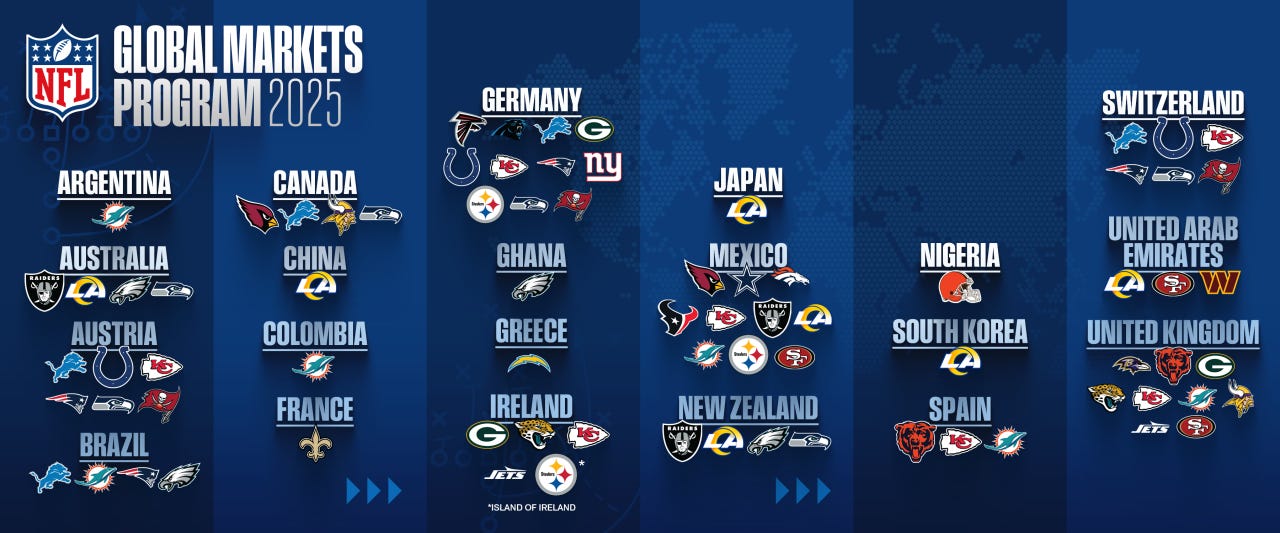
🏈 What: The NFL’s Global Markets Program, which grants clubs the rights to pursue marketing activities in other countries, has added two new countries (the UAE and Greece), and four new teams (Baltimore Ravens, Green Bay Packers, LA Chargers and Washington Commanders) to its roster. The league has also confirmed new venues for its international games, with NFL matches now scheduled in Berlin, Madrid, Dublin and Australia as well.
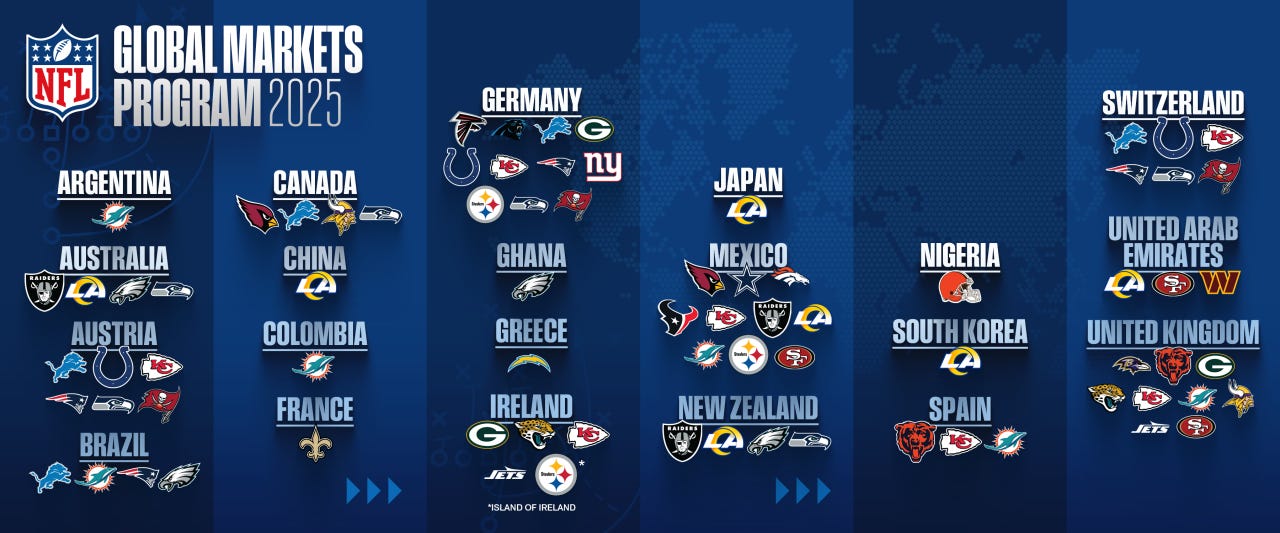
An overview of the NFL’s Global Markets Program. (NFL) 🤔 Why?: The NFL’s international reach continues to grow strongly, and its games outside of America have been quite successful from a commercial point of view. Keeping that in mind, it’s only fair that the league’s teams attempt to expand their international marketing efforts.
Though revenue numbers from international marketing programs are not very high yet, league executives will be hoping that with more markets and teams being gradually added to the GMP, this will begin to change soon. The GMP stipulates that 20% of all revenue over $1 million in a given country has to be shared with the rest of the league from the third year of operations onwards. That is merely a drop in the ocean for an NFL team, so if things don’t change, we might see calls for a policy change.
📰 Read more:
-
The NFL’s overview of their Global Markets Program and its expansion. (NFL)
-
The jury is still out on whether the league’s program has been successful, with the Sports Business Journal reporting that revenues remain minimal after three years of its launch. (SBJ)
-
More on the NFL’s plans to continue playing games abroad, in new locations including Berlin and Dublin. (Forbes)
Chelsea dodge PSR sanctions temporarily by selling women’s team to their parent company for £198.7m.
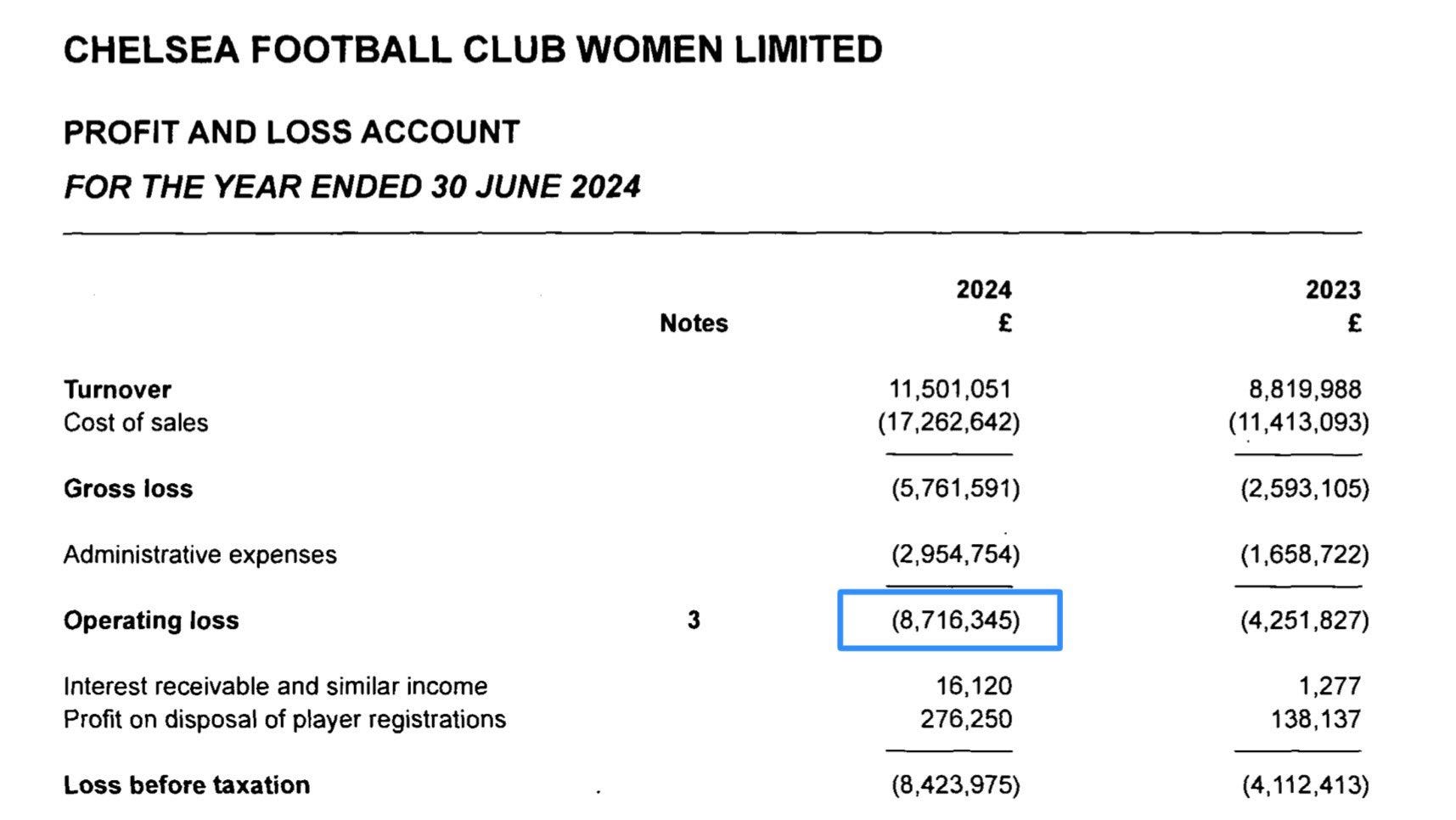
👧 What: Chelsea reported a pre-tax profit of £128m for the 23/24 season, but this was only possible due to a controversial sale of their women’s club to the team’s parent company, BlueCo for around £200m pounds. Such transactions are permitted by the Premier League’s profitability and sustainability rules, but this specific sale has not yet been approved by its fair value controls. UEFA on the other hand, have already refused to include the deal in Chelsea’s accounts, which means that a sanction or exclusion from UEFA competitions is likely for the club due to an FFP breach.
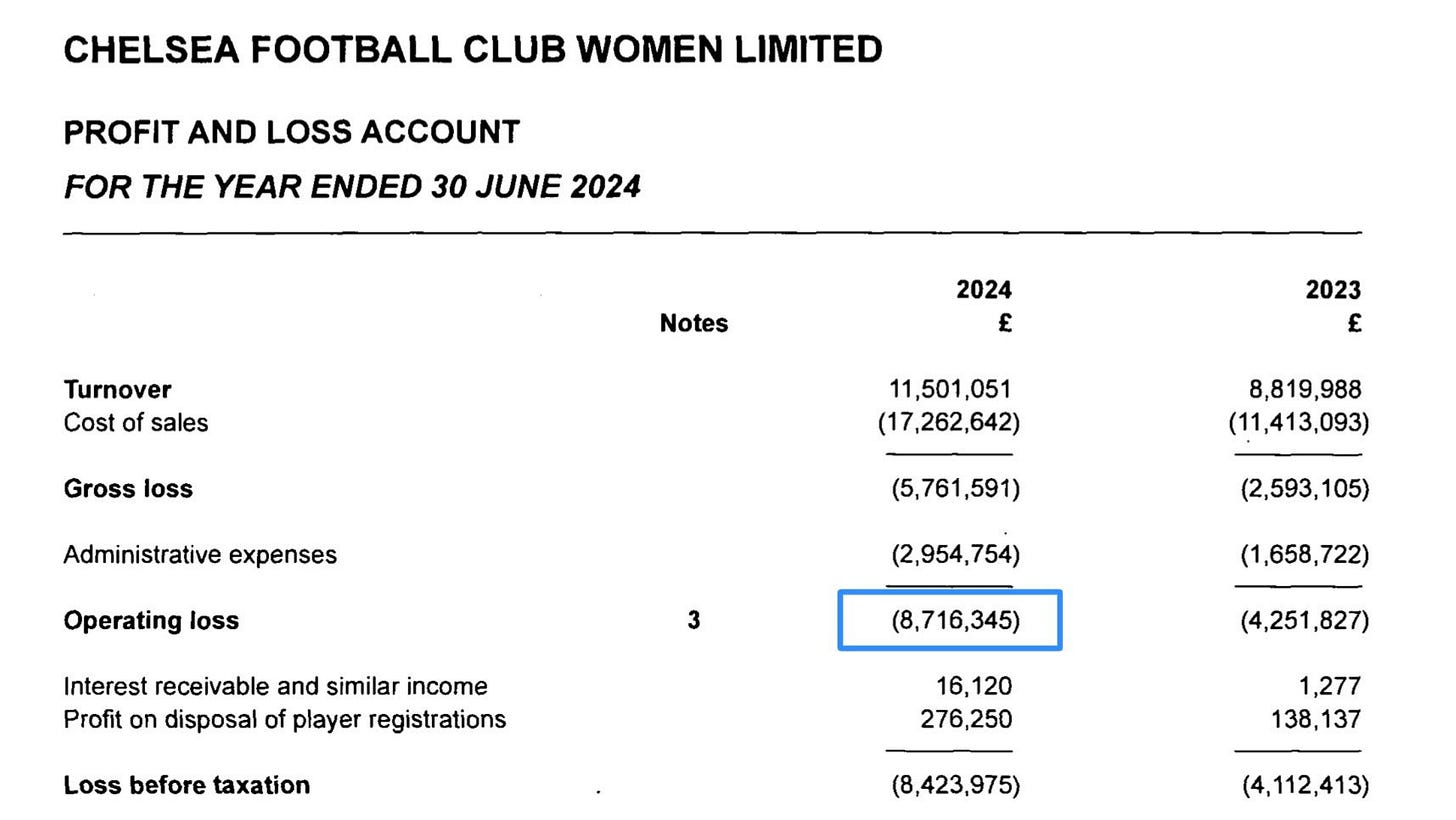
Chelsea’s women’s team only made 11 million pounds last year, and operated on a large loss. Thus, a 200m valuation seems sketchy to many observers. (Chelsea FC) 🤔 Why: Clubs have been looking for increasingly creative loopholes within the Premier League’s PSR framework over the past few years, and Chelsea have been among the leaders in this regard since their takeover. Their exorbitant spending in the transfer market has meant that meeting PSR guidelines is nearly impossible using normal means; last year, the club sold some hotels and a car park at a profit of 76 million pounds to help, and this sale is simply an iteration of the same tactic. However, given the fact that Chelsea’s women’s team only makes 11 million pounds a year, operates on a loss and doesn’t have a massive list of valuable assets, a 200 million pound valuation seems overblown.
The Premier League is yet to give its verdict on whether Chelsea’s sale was valid, however if it is found that it wasn’t, points deductions and fines similar to those of Nottingham Forest and Everton might be coming. UEFA are far stricter, and Chelsea’s losses are double what they allow. A settlement with them is being negotiated now, with the possibility of another fine and exclusion from European competitions.
📰 Read more:
-
An overview on Chelsea’s scheme, and on potential punishments that could await them. (BBC)
-
Clearly, Chelsea are inspiring their contemporaries. Aston Villa are planning to sell their women’s team for similar gains. (The Times)
-
Stefan Borson’s reading of Chelsea’s PSR shenanigans, and how they could sound an effective death knell for regulations like it. (Stefan Borson on Substack)
Trump declares tariff ‘Liberation Day’, sportswear stocks sent into a frenzy
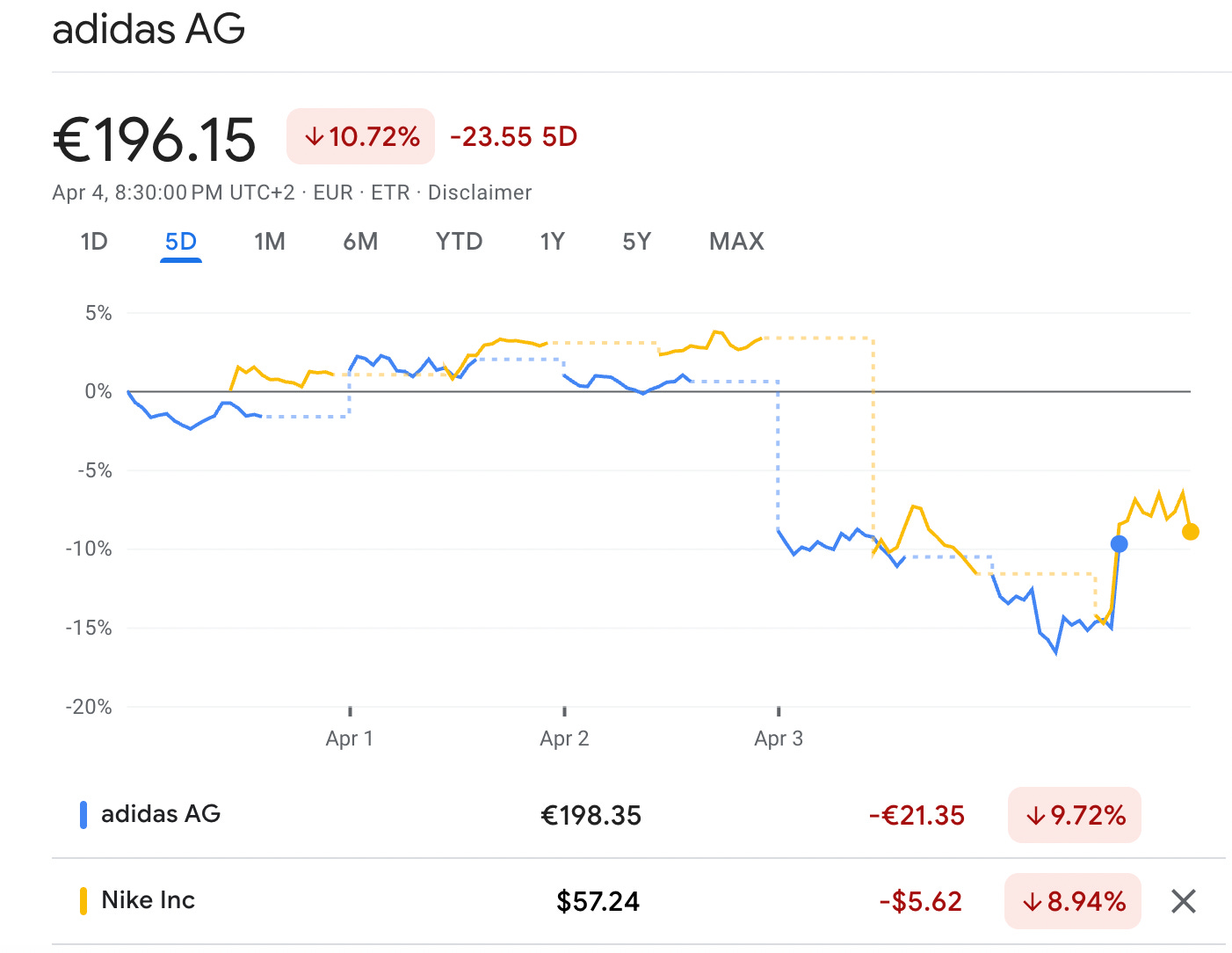
📺 What: The Trump administration’s global tariffs have rocked the world economy, wiped out trillions from public markets, and stoked fears of a worldwide recession. Unsurprisingly, sportswear companies that rely on well-integrated, global supply chains are among the big losers.
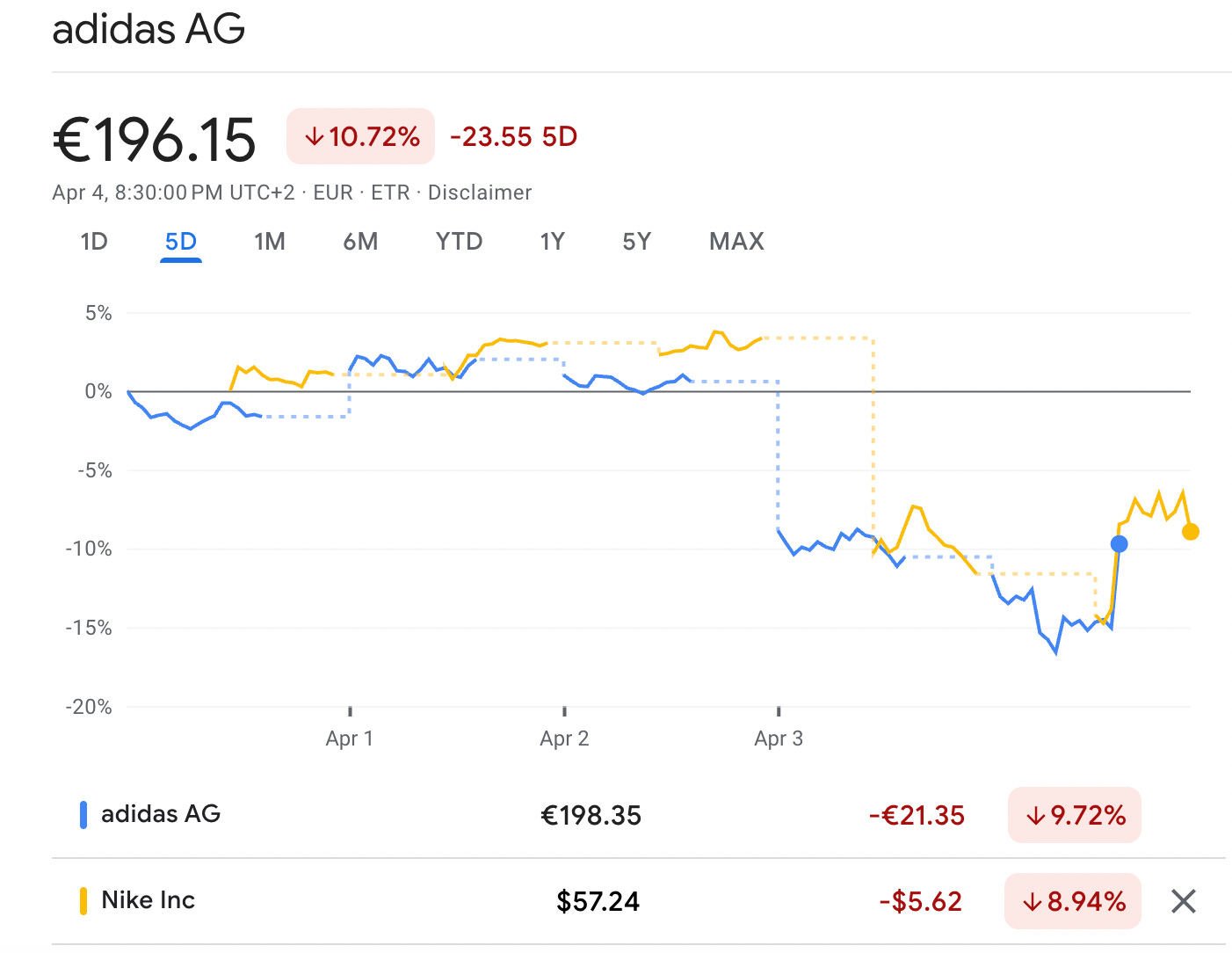
Adidas and Nike stock has plummeted since Trump’s tariffs were announced, but slight recoveries have followed amidst hopes of a trade deal with Vietnam, India and the EU. (Google Finance) 🤔 Why: A majority of the products that companies like Nike, Puma and Adidas produce are made in Asia, with Vietnam alone representing around 40% of Adidas’ shoe production capacity. Trump has slapped a 46% levy on Vietnam, which would require shoe manufacturers to raise prices by anywhere from 20 to 30% to meet rising costs.
Finding new countries to manufacture in is a lengthy, expensive and risky process, so for now, companies with a large presence in Vietnam are pinning their hopes on an upcoming meeting between Trump and To Lam, the General Secretary of the Communist Party of Vietnam. Talks of reduced tariffs and a possible delay are already abuzz, which would provide some relief.
📰 Read more:
-
The BBC’s reading of how Trump’s tariffs might impact professional sport. (BBC)
-
The Financial Times’ report on the impact brands like Nike and Adidas are facing from tariffs. (FT)
-
ESPN’s investigation into how the industry is preparing to shield against Trump’s devastating tariff announcement. (ESPN)
Other pieces of news that interested us:
-
Meta and the UFC have signed a large-scale sponsorship deal, months after UFC President and CEO Dana White joined Meta’s board. The deal will see Meta sponsor UFC events, and also integrate its technologies with said events to improve fan engagement. (CNBC)
-
The Ultimate Tennis Showdown, a new, fast paced tennis format held a tournament at a Roman amphitheatre in Nîmes, which made for some amazing visuals. Founded by French tennis coach and entrepreneur Patrick Mouratoglou, the event attracted 20,000 spectators over two days, thus creating a raucous atmosphere. (Le Figaro)
-
OliverWyman has come out with a new report/how-to guide for private equity investors wanting to enter sport. It contains lots of nifty data points and a good high level overview on where value can be found for PE investors in sport over the next few years. (OliverWyman)
That’s all for this week! For more content, follow us on LinkedIn, and if you’re interested in learning more about us, please visit www.sportinvestmentstudio.com
-
-
Sports Investment Newsletter 5: Mbappé sues PSG, Adidas looks to invest in the Bundesliga, and the Masters and Wimbledon provide a masterclass in luxury segmentation.
Welcome to another edition of our weekly newsletter on sports investment. This week, we discuss the growing appeal of the Masters and Wimbledon for the super-rich, Mbappe’s legal battle with PSG, a potential investment from Adidas into the Bundesliga, and much more!
The Sport Investment Studio is an investment and advisory platform dedicated to transactions a the intersection of Sport, Media and Entertainment based in Paris. Visit us for more information www.sportinvestmentstudio.com
The Masters Tournament tees off amid ever-expanding interest from luxury buyers.
⛳️ What: The 2025 edition of the Masters Tournament at the Augusta National Golf Club set off in the US last week. The golf club is already seen to be among the world’s most exclusive, and the tournament itself is now further commercialising its appeal to the wealthy.
🤔 Why: Golf has always been a sport for the wealthy, and Donald Trump’s attachment to his golf resort of Mar-a-Lago has taken this narrative to another level. Thus, access to a tournament like the Masters now not only represents another totem of luxury, but a passport to potentially network with the new American elite. Off the back of this, the club’s new hospitality venue is seeing ticket prices as high as $17,000; the existing Berckman’s Place requires a buy-in of around $25,000. Replete with high end food and hospitality offerings, these clubs represent the pinnacle of golf luxury, and more such venues are on the way soon. The effect has also spread to areas around the golf course; short-term rentals in the area are now a mini-industry of their own, and see skyrocketing prices during tournament season.
📰 Read more:
-
Front Office Sports’ lowdown on the Masters’ expanding luxury appeal, which is leading to soaring revenues. (FOS)
-
An amusing (and possibly inspiring) story on a local refusing to sell her house, which is adjacent to the Augusta National Golf Club, despite exorbitant offers and pressure. (Yahoo)
-
Joe Pompliano’s overview (from 2023) on how the Masters has become a $150 million business, great for those that are new to golf. (Joe Pomp Show)
Mbappé’s legal team takes fight to PSG in a bid to recover €55m in bonuses from the club.
🇫🇷 What: Kylian Mbappé’s legal team has filed multiple additional lawsuits to recover €55m in unpaid bonuses, which the player’s camp claims are owed to him. This is the latest chapter in a relationship that has become increasingly acrimonious in the past couple of years.
🤔 Why, and what’s next: The last few years of Mbappe’s spell at PSG were quite tumultuous, with reports of dressing room squabbles, disagreements with the board, and a long-standing contract dispute. The player signed a new two year contract in 2022, supposedly under much pressure from external parties, but chose not to activate the option of extending it for a third year, much to the ire of the club’s fans and board. He then joined Real Madrid for free in 2024, and his relationship with PSG has continued to sour since.
PSG argue that in 2023, when the player decided against signing a new contract, there was a verbal agreement that his loyalty bonus would be relinquished. The money has already been frozen from PSG’s bank accounts according to Mbappe’s legal team.
UEFA have already clarified that the case relates to them only tangentially, and hence they are unlikely to intervene in the matter. Thus, the onus to decide who wins is on the French legal system.
No matter the outcome, one thing is clear: the biggest stories in Ligue 1 always seem to be happening in the courtroom, and not in and around the pitch.
📰 Read more:
-
An overview on Mbappe’s continuing rift with PSG. (New York Times)
-
Excerpts from Kylian Mbappe’s first interview since joining Real Madrid, which has sparked more controversy in France. (OneFootball)
The DFL explores the possibility of a €100m cash injection from Adidas.
🇩🇪 What: After years of trying to secure external investment into the Bundesliga, the Deutsche Fußball Liga is now reportedly closing in on a €100m deal with longtime partner Adidas.
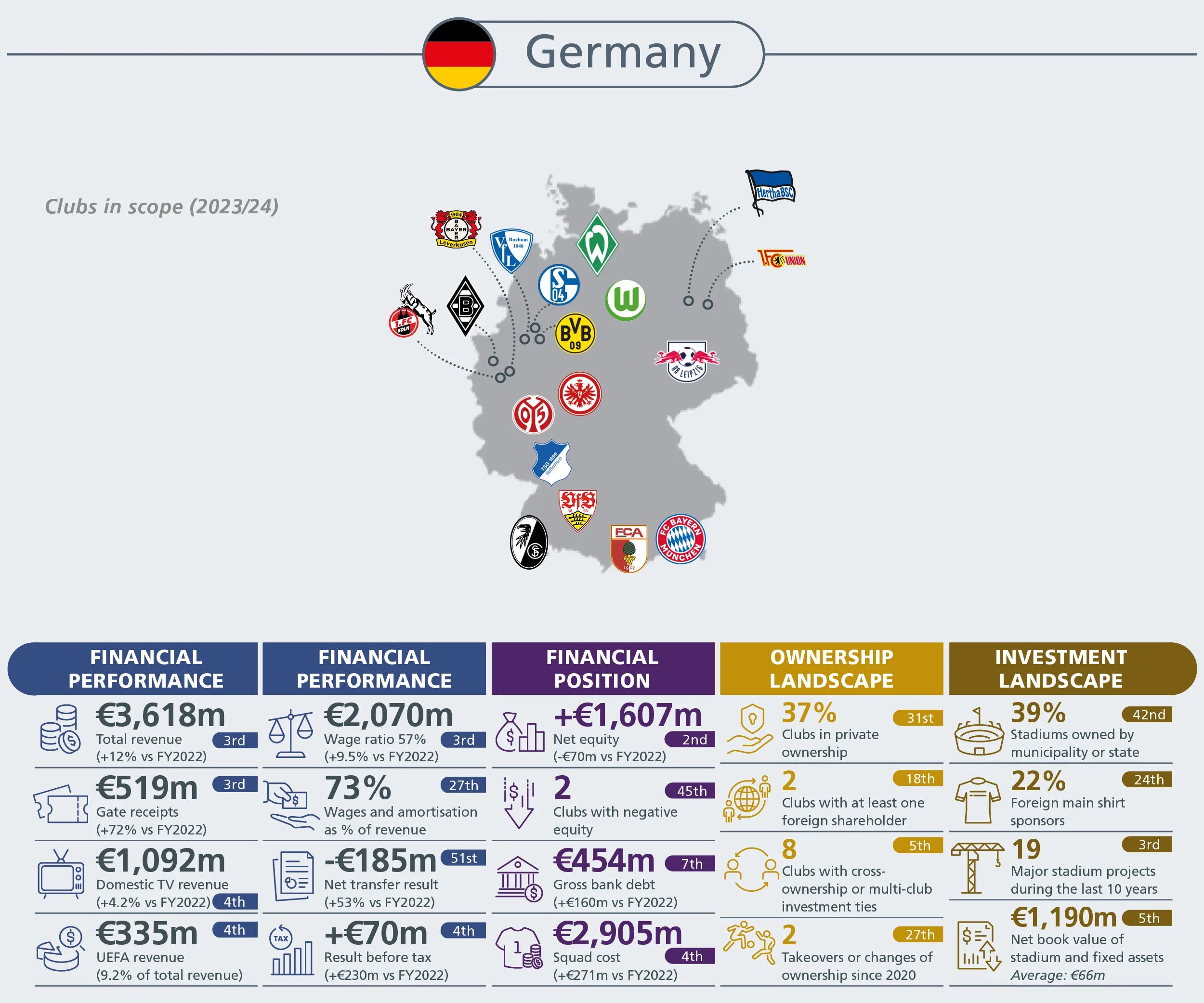
🤔 Why: The Bundesliga’s competitors in France and Spain have received large cash injections from private equity funds in recent years, but strong anti-corporate fan sentiment has prevented the same from happening in Germany. Though the league remains competitive and financially sustainable, there is a belief among the halls of power that to compete with the Premier League and the might of European giants like Real Madrid and Barcelona, more capital is required.
Compared to foreign funds like CVC, Adidas represents a homegrown and trustworthy alternative, even if the corpus of investment is much smaller than what private equity funds have committed to other leagues. As part of the deal, expanded sponsorship agreements are likely to be on offer, and though part of the investment will have to be repaid, the interest rate is only around 2%. It remains to be seen now whether the deal will actually come into effect, or if it’ll be shunned to the annals of history like other similar proposals in German football.
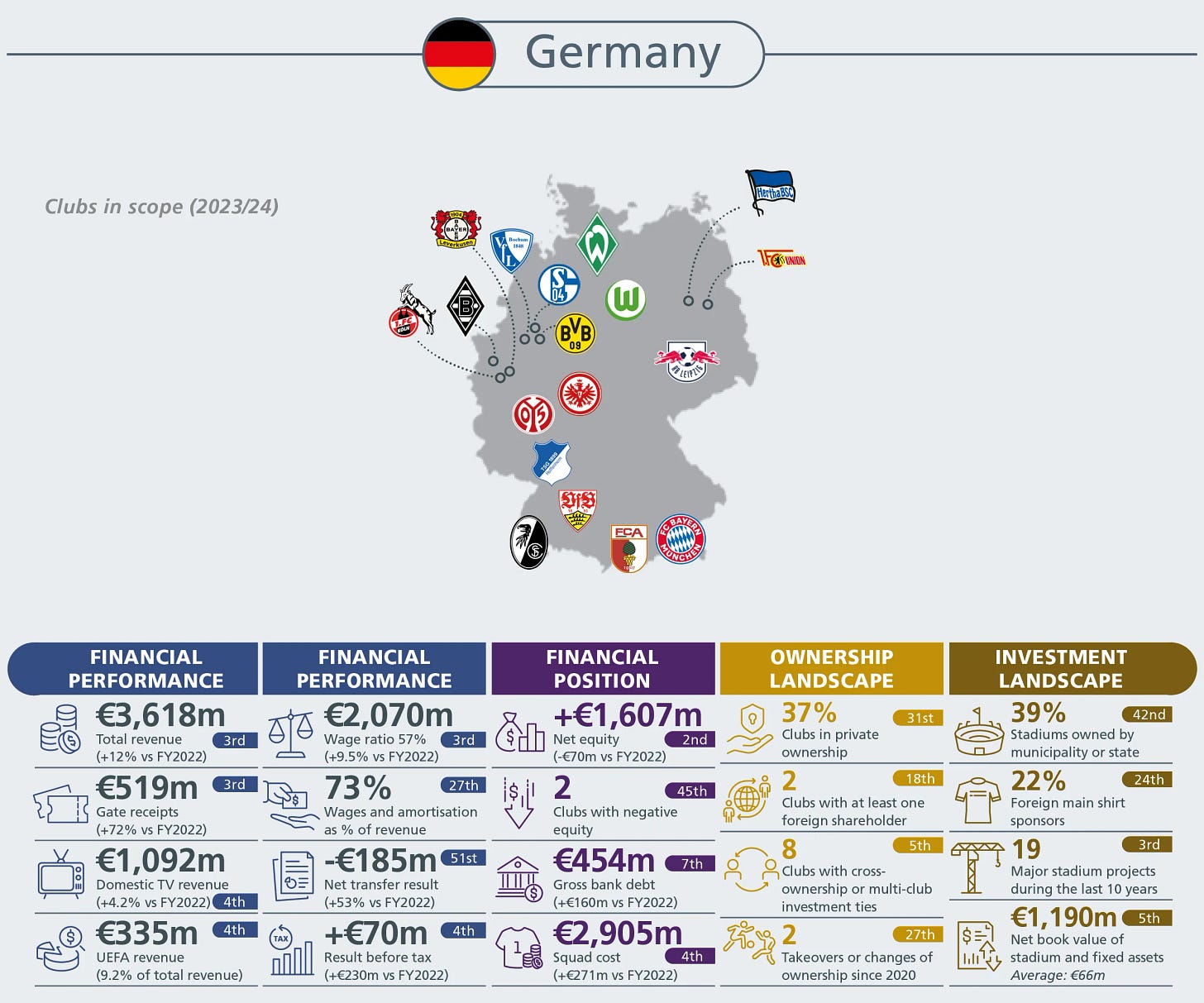
The Bundesliga’s financial landscape; private ownership remains elusive unlike other major European leagues. (UEFA) 📰 Read more:
-
A primer on how the deal could look. (Sports Business)
-
A timeline on the DFL’s failed attempts to source private investment into the Bundesliga. (Theo Ajadi)
Other pieces of news that interested us:
-
Paris Saint-Germain have become the first football club to launch an accelerator at Station F, the world’s largest startup campus. The club are now looking for startups to onboard in three key fields: fan experience, stadiums & training facilities, and health & performance. Across the pond, Utah Jazz owner Ryan Smith has launched a $1 billion fund for startups in sport-tech and entertainment. Ryan Sweeny, partner at Accel, will also be part of the fund. (GlobalData /Station F)
-
The City Football Group and the Oak View Group have launched a joint-venture that will provide operations and venue management services. The company will begin by providing catering services at the Etihad Stadium and the Co-op Live arena, and shall stabilise employment for around 3,000 people. (City Football Group)
-
PwC have released their annual report on the evolution of the sports industry in the Middle East, where they have a sizeable practice. The report looks at how infrastructure upgrades, continued government investments and increased media attention are fuelling the region’s dreams to become the centre of world sport. (PwC)
-
The Wimbledon’s Number One Court debentures, which guarantee best-in-house hospitality and seating at the tournament from 2027-31, now cost a whopping 73,000 pounds. The debentures are tradeable assets, and are issued by the All England Lawn Tennis Club to fund infrastructure upgrades to their facilities.
That’s all for this week! For more content, follow us on LinkedIn, and if you’re interested in learning more about us, please visit www.sportinvestmentstudio.com
-
-
Sports Investment Newsletter 6: Velocity invests in Unique Sports Group, the USL threatens the MLS, and golf debates a phone-free world.
Welcome to another edition of our weekly newsletter on sports investment. This week, we cover a major investment in football player representation, a debate on whether phones should be banned in sporting events, the USL’s decision to inculcate promotion/relegation, and some more recent acquisitions and fundraising rounds in sport.
The Sport Investment Studio is an investment and advisory platform dedicated to transactions a the intersection of Sport, Media and Entertainment based in Paris. Visit us for more information www.sportinvestmentstudio.com
PE firm Velocity Capital Management invests $100 million in football agency Unique Sports Group.
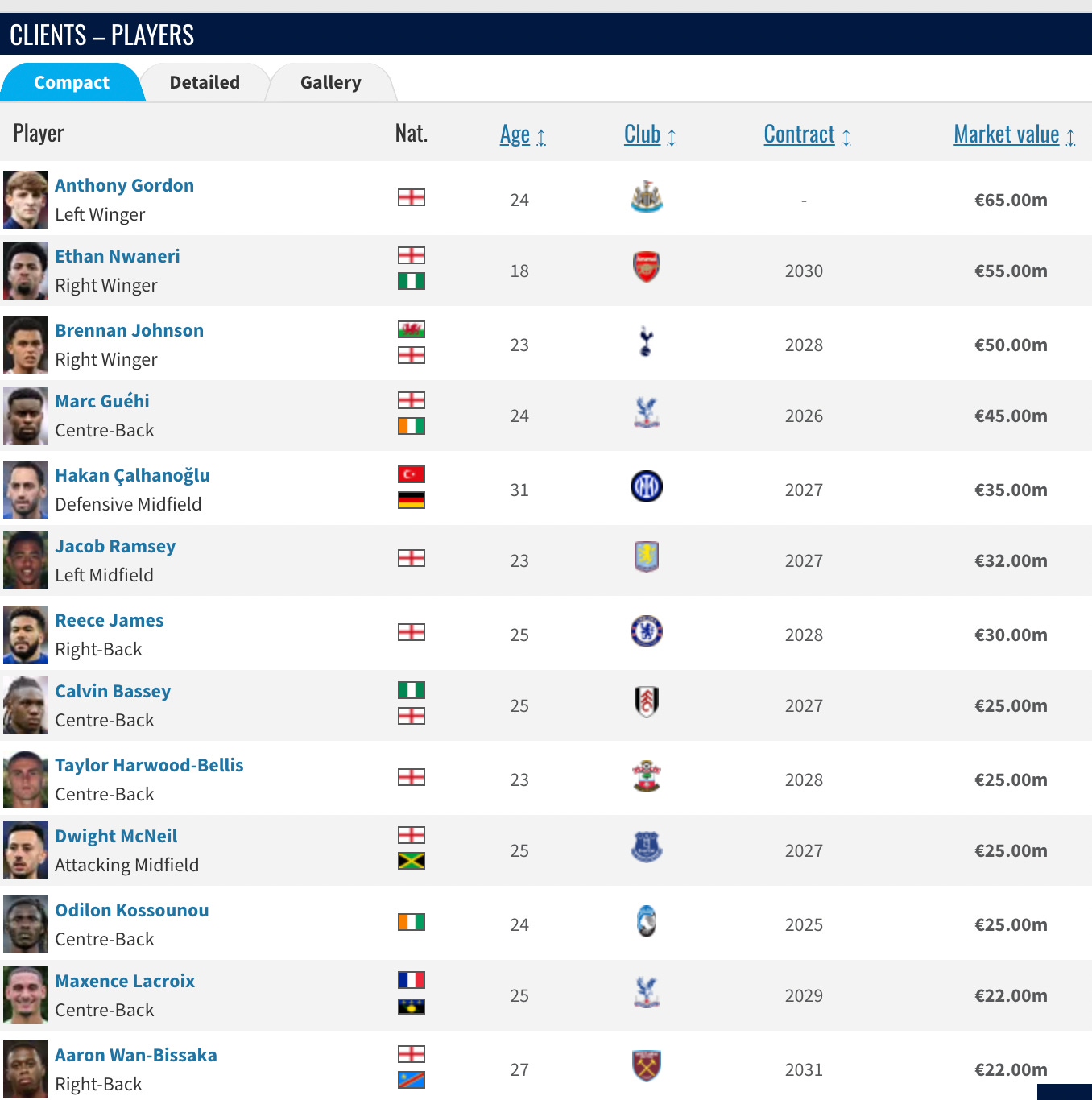
⚽️ What: American private equity firm Velocity Capital Management will acquire a stake in football talent agency Unique Sports Group. Velocity has previously made a number of investments in sports and gaming, and USG, which represents a number of high-profile footballers (and increasingly, cricketers) is the latest.
🤔 Why: Broking is big business in football; in 2023, clubs spent $888 million on agents. Despite stronger FIFA regulations, more agent-independent transfers and talks of a world without intermediaries, the transfer market is still heavily dependent on agents. That means that there is a lot of money to be made for outside investors willing to take a bite out of agent commissions. Access to a top quality talent pool that is bound to get high profile transfers essentially guarantees a steady stream of income, and that seems to be the appeal for Velocity in this deal. In recent years, the agency landscape has also become concentrated in the hands of a few key players; USG hasn’t been affected by that yet, and its heads are hoping that an intervention from Velocity will help them maintain their autonomy.
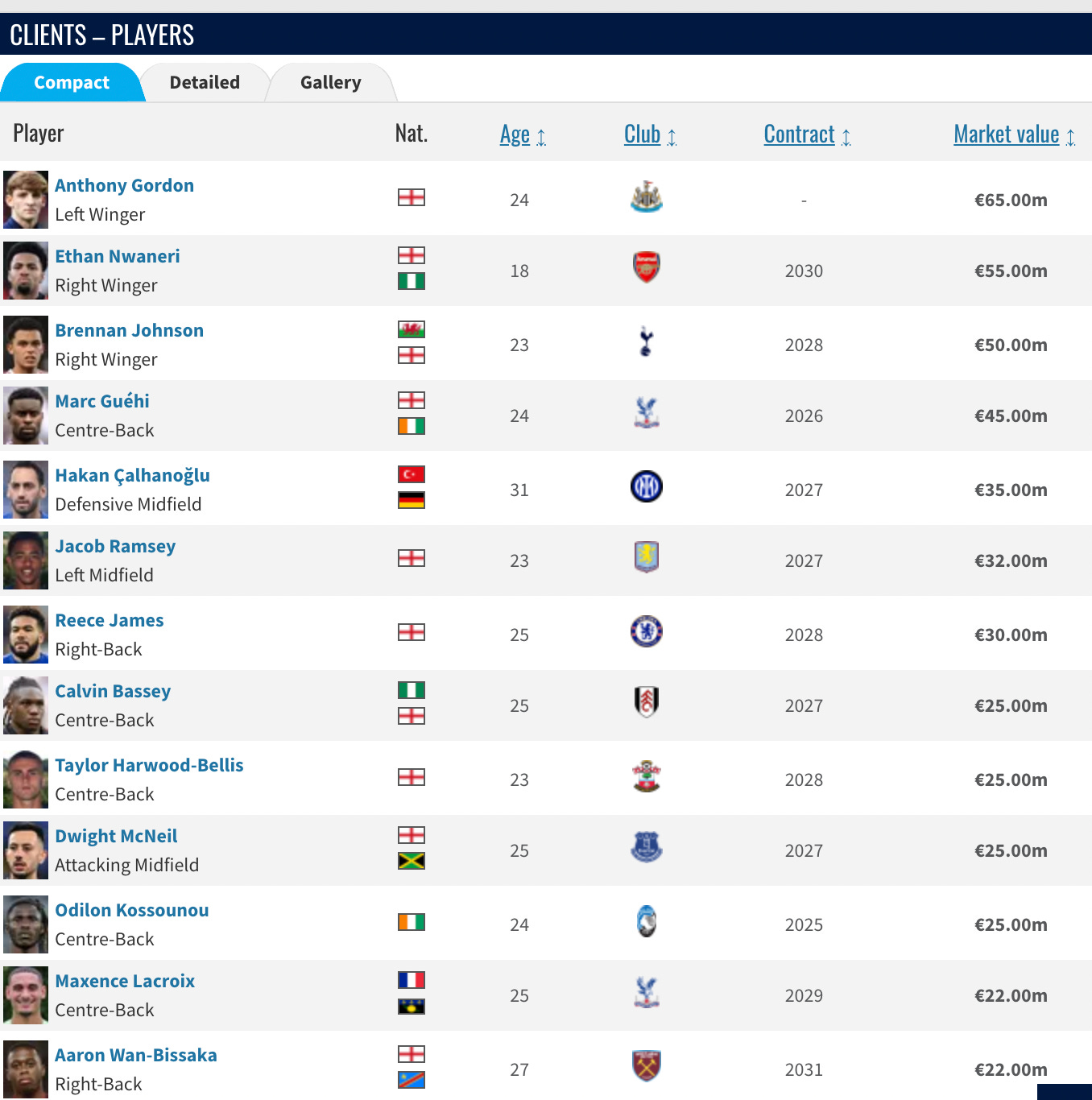
USG has nearly 600 players on their books, with a combined estimated transfer value of over a billion euros. These are some of their marquee names. (Transfermarkt) 📰 Read more:
-
More information on the deal. (SportsPro)
-
Forbes’ take on the deal, what it could mean for the increasingly cartelised state of player representation, and how Velocity could exit and profit. (Forbes)
Promotion and relegation is coming to US soccer, and it may threaten the MLS’ hegemony.
🇺🇸 What: The United Soccer League and its constituent clubs have committed to adopting a promotion/relegation system that will be in place by 2028. The USL has been touted by many to be a serious, more authentic alternative to the MLS, and this is adding impetus to that belief.
🤔 Why: The MLS has long been criticised for a closed shop; though its nature creates safe environments for private investment and an entertainment-led model led by superstars and big names, many believe that it in its current format, it cannot compete with the world’s top football leagues in terms of sporting quality and fan engagement. The USL, its hipster cousin, ended its partnership with the MLS in 2022, and has since established itself as a property of its own as opposed to the eternal second tier of US football. With promotion and relegation now in the fray, and with there already being strong, community led team-brands in the league, there is a belief that the USL can viably compete with the MLS for attention and success in the coming decade. The league’s expansion structure and business model is also less constrained than that of the MLS, which gives it lots of room to grow. A key factor here of course, is that the USL will be able to provide underdog narratives and levels of jeopardy that the MLS structurally prohibits.
📰 Read more:
-
’s piece on this very topic. (Gameplayer on Substack)
-
Some logistical information on how promotion and relegation will work in the USL. (United Soccer League)
-
USL President Paul McDonough’s interview on the league’s plans to introduce promotion and relegation. (CBS Sports Golazo)
No phones at The Masters: should other sports follow?
⛳️ What: The Masters Tournament prohibits spectators from using their phones during the tournament. This is done to preserve the sanctity and exclusivity of the experience for attendees, and to ensure that fans are wholly focused on the action. The policy has many fans, and it seems to be having the intended effect, which is now prompting calls for other major sporting tournaments to follow suit.
🤔 Why: The policy, which has been in place for a long time, has worked quite well, according to spectators, players, and outside observers. The atmosphere is raucous, everyone is involved in the action, and in an age of information anxiety, it is possible to actually live in the moment. That stands in stark contrast to most sporting events, which now are dependent on increasing digital access and engagement, which in turn is dependent on the presence of a phone. Though some people are calling for similar bans in other golf tournaments (and possibly other sporting events), the ban works for the Masters simply because the allure of the tournament is so focussed on exclusivity and being esoteric. It’s credible that the product is so good that people can enjoy it so much despite being disconnected, but it remains to be seen whether such bans can viably be transplanted to other sports. To make them successful, sports properties need to create products as good as The Masters.
📰 Read more:
-
More information on the phone ban at the tournament, and testimonies on the impact it has on its atmosphere. (Front Office Sports)
-
Despite The Masters’ successful strategy, other major golf tournaments are not planning to ban phones altogether. This is not just due to fan engagement concerns, but because of how inseparable mobile devices have become from live experiences due to concepts like digital ticketing. (Front Office Sports)
-
Wimbledon, which has had similar rules in place over the years, softened them in 2018 during the FIFA World Cup. In that case, competing interest with football and fan attention was among the theorised causes. (The Guardian)
Other pieces of news that interested us:
-
North Sixth Group, an American investment firm led by Matt Rizzetta, is about to acquire Italian basketball team Napoli Basket. The deal comes amid rising interest in European basketball due to the continued success of the EuroLeague, and the impending European cousin of the NBA. (Front Office Sports)
-
The founders of Topgolf, Steve and David Jolliffe, have raised $34 million for a new, gamified version of pool called Poolhouse. Akin to the STRIKR boxing concept we covered previously, Poolhouse promises to bring more technology and gamification to the sport it is seeking to revolutionise. (Financial Times)
-
LaLiga has ended a two-decade long relationship with production partner MediaPro, instead choosing to sign Host Broadcasting Services (HBS) for the next five-year distribution cycle for its competitions. MediaPro have not taken the divorce well, and are planning to challenge the contract, citing HBS’ supposed inexperience and questions over the fairness of the tender process. (SportsPro)
-
Brentford owner Matthew Benham has acquired Spanish third-division side Mérida, two years after he sold his stake in Denmark’s Midjtylland. One of the pioneers in multi-club ownership, Benham has been lauded for creating a clear and successful philosophy at his clubs. The acquisition comes on the heels of Steve Menary’s thought-provoking article on multi-club ownership, wherein the writer argues that the cons of the concept are beginning to outweigh the pros. (Associated Press / Play the Game)
That’s all for this week! For more content, follow us on LinkedIn, and if you’re interested in learning more about us, please visit www.sportinvestmentstudio.com
-
-
Sports Investment Newsletter 7: PE interest continues to rise, English rugby reimagines itself, and Netflix doubles down on sport.
Welcome to another edition of our weekly newsletter on sports investment. This week, we talk about an impending new wave of private equity investment in sport, a potential upheaval in English rugby, the role of sport in Netflix’s recent successes, and much more!
The Sport Investment Studio is an investment and advisory platform dedicated to transactions a the intersection of Sport, Media and Entertainment based in Paris. Visit us for more information www.sportinvestmentstudio.com
A new wave of private equity interest in sport beckons.
💰 What: American private equity firms are gearing up for a big wave of investment in sport, with the likes of General Atlantic, Arctos, RedBird and more signalling confidence in the industry.
🤔 Why: Sport, as an uncorrelated asset class, has proven to be a safe and fruitful investment. As the battle for attention and audiences gets fiercer, a perfect storm for a new wave of private equity investment is brewing, in leagues, real estate, talent management agencies, teams etc.
📰 Read more:
-
More on the continually rising interest that private equity firms are taking in sports properties. (Bloomberg / Profluence)
-
Key private equity players in the US have long been preparing to inject money into college sports, with RedBird Capital Partners leading the race to get the ball rolling. (Dallas Magazine)
-
Veteran sports investor David Checketts has joined forces with the Eccles family to launch a $1.2 billion private-equity fund focussed on sport investments. (Sportico)
Netflix remains strong despite market headwinds, performance helped by sports properties.
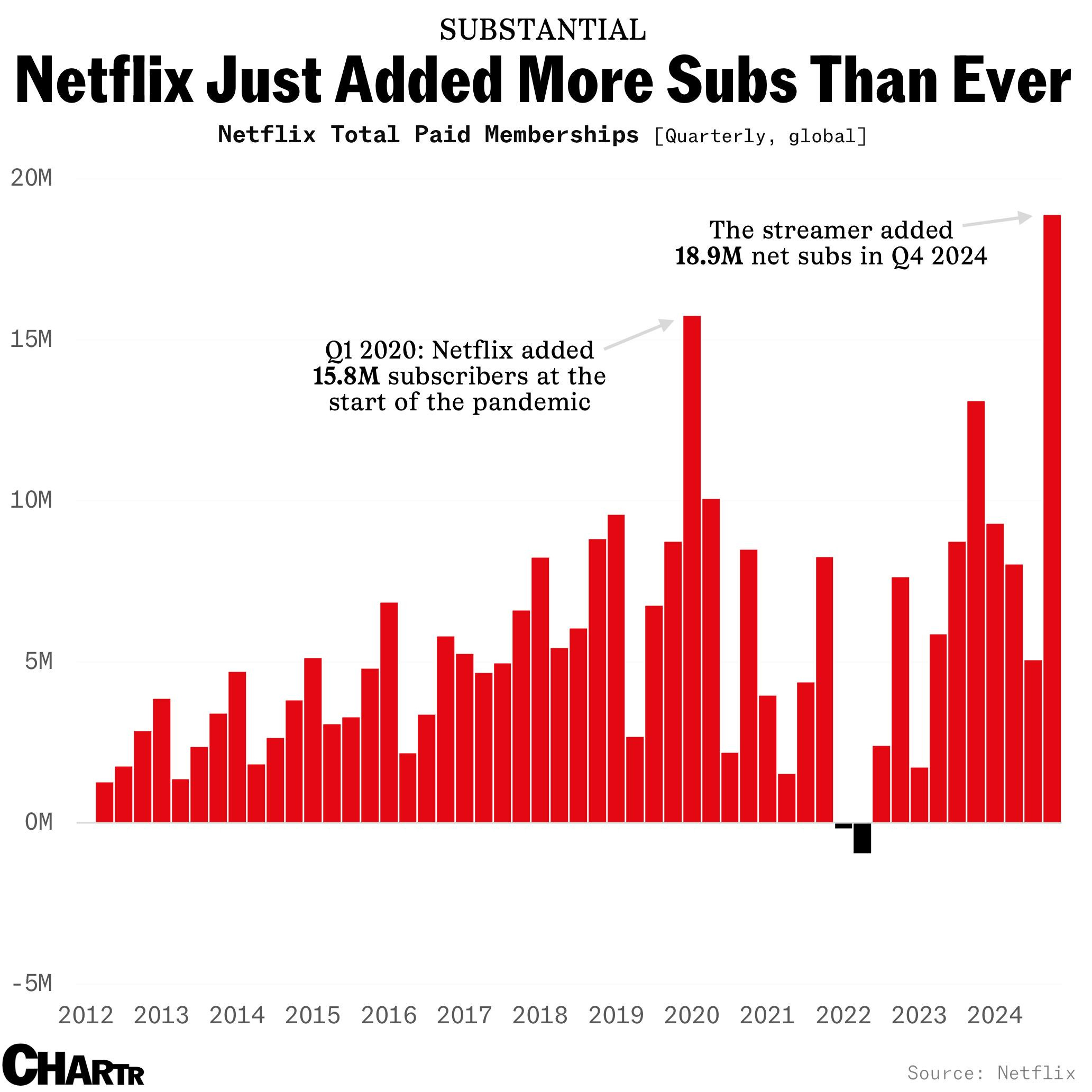
📺 What: Despite major fluctuations and slides in public markets, Netflix has stayed strong and is up 24% in the year-to-date,helped by successful investments in sports rights.
🤔 How, and why?: The celebrity boxing fight between Jake Paul and Mike Tyson, the WWE, as well as the addition of NFL games to the platform have unlocked new audiences for Netflix. Given that sport properties by nature (at least the established ones) provide a degree of excitement, a pre-existing brand image and a solid proof of concept, investments in media rights can prove to be safer than pouring money into new movies and TV shows especially in uncertain economic times. Sports audiences have also proven to be recession/uncertainty proof, and this is what is driving interest to it, whether from private equity funds (as we saw above) or from media majors.
With the streaming landscape becoming as scattered and expensive as traditional cable television, major players are all lining up to create a one-stop shop that provides the most value for money. Sport is part of this strategy, and Apple’s play with the MLS is a key example, even if it has not panned out as expected. If Netflix can keep picking up high-profile sports rights and package them attractively, it may find far more success.
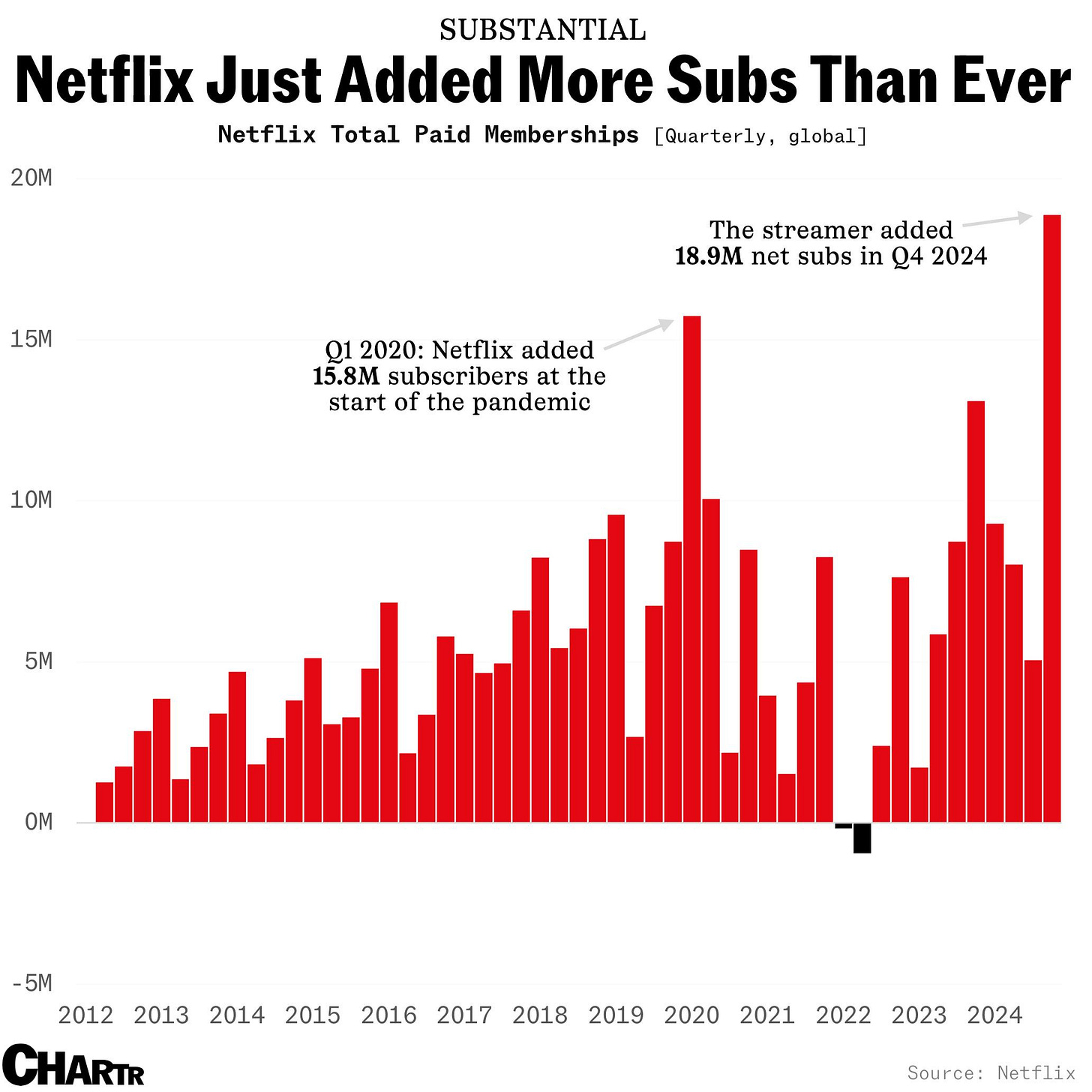
Source: Humpdays on Substack / Chartr 📰 Read more:
-
FOS’ report on Netflix’s recent market successes (Front Office Sports)
-
Netflix added more subscribers last quarter than in any other previous quarter, and it seems as if their investments in WWE and influencer boxing did indeed play a large role in this. (Insider Sport)
-
More on Netflix’s newfound and ambitious approach to sport. (Financial Times)
English rugby looks to Indian cricket for inspiration as it plots a major revamp.
🏉 What: To revive itself, England’s Premiership Rugby league is looking east to the Indian Premier League for inspiration. By looking to create a closed-shop league led by a franchise model and new expansion teams, it wants to save a sport that is currently deeply endangered in its home market.
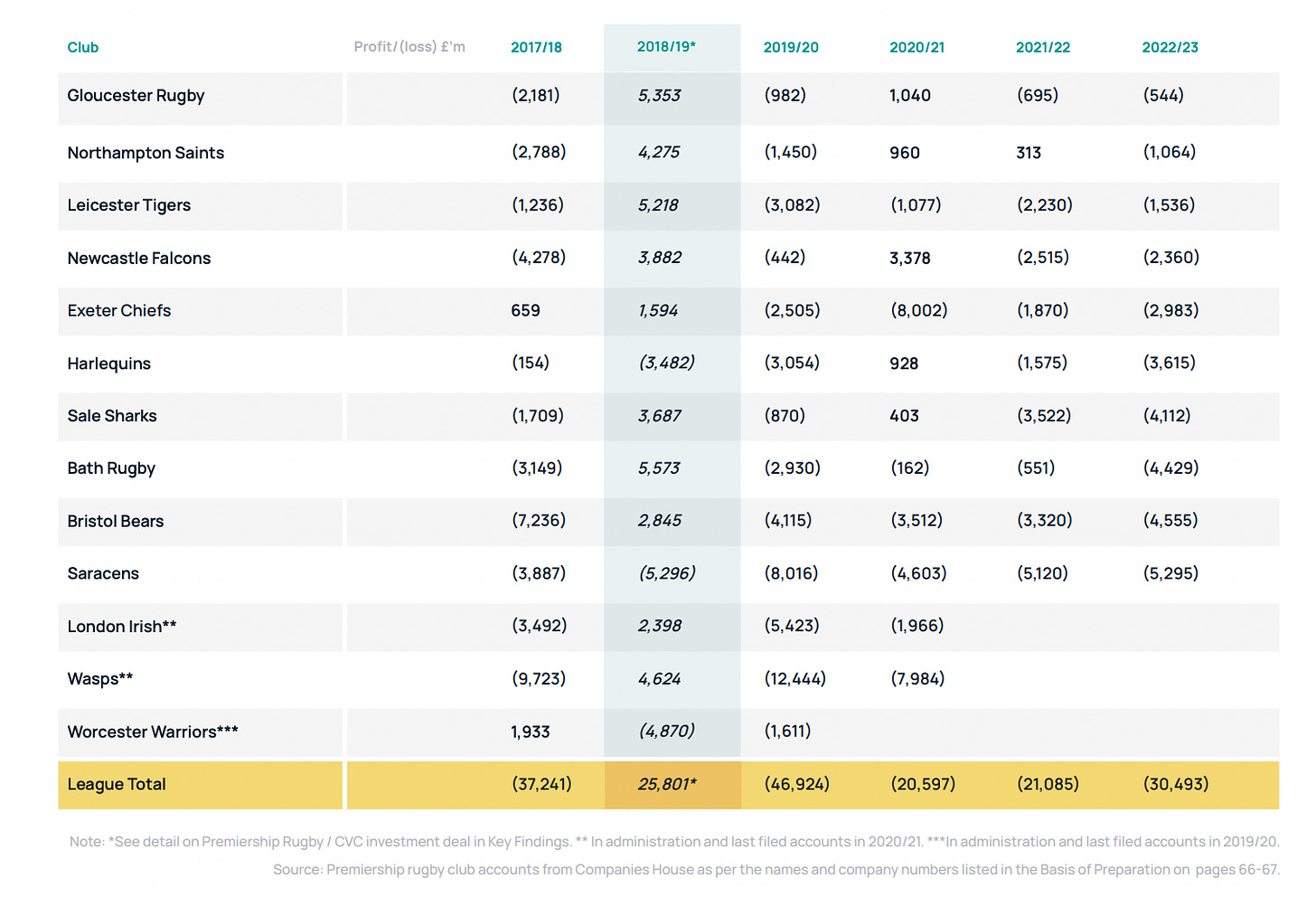
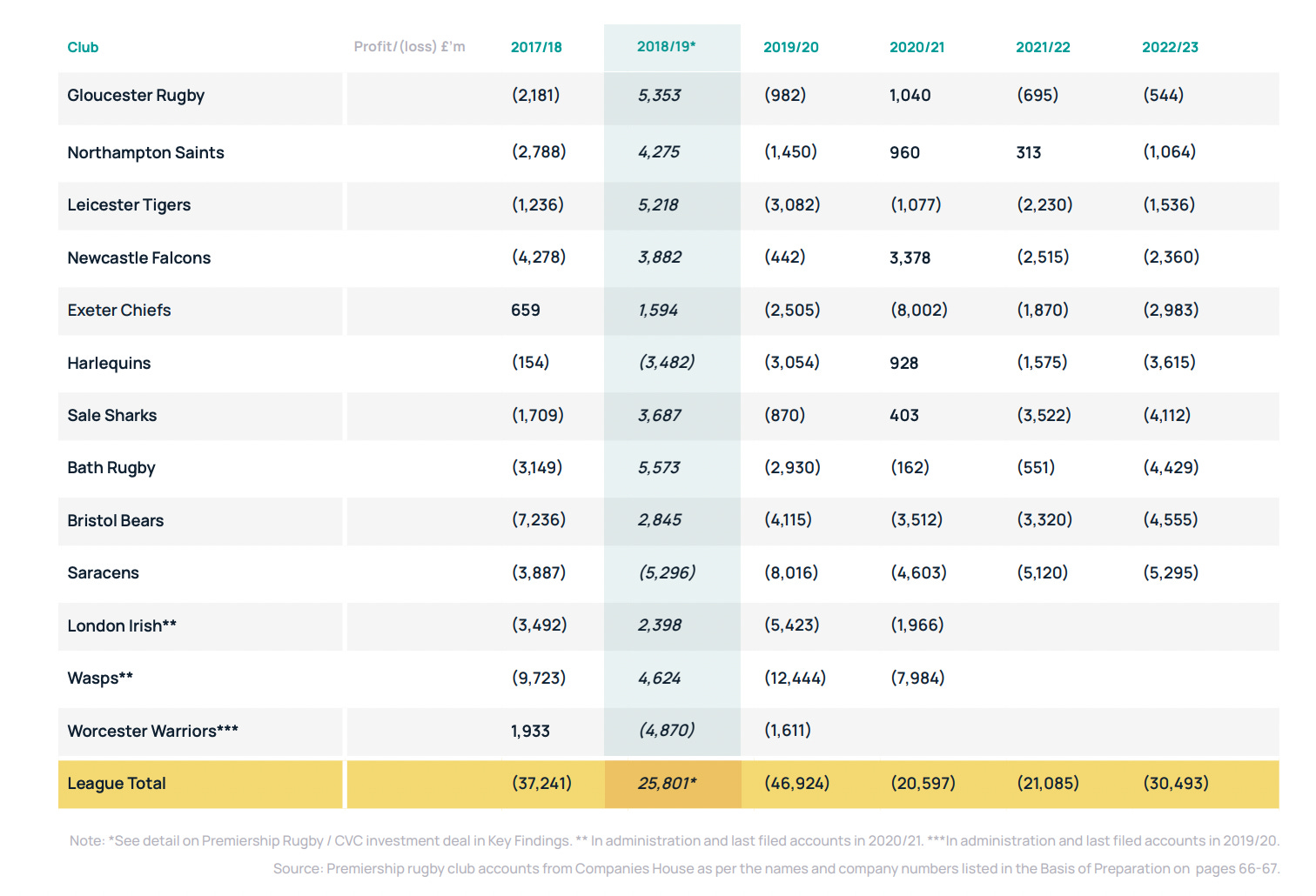
Profit/loss figures of all Premiership Rugby clubs; no club made a profit in 2022/23. (Leonard Curtis) 🤔 Why: Rugby in England is in a crisis. The national team is struggling, players aren’t being paid on time, power struggles persist among club leaders and union board members, losses are rife, and the grassroots game is dying. Talks of a revamp are also not new by any means. Over the past decade, such transformations of the sport have been planned numerous times, but each iteration has either failed to materialise, or failed to soothe the crises that plague it.
An IPL inspired transformation seems to be the new trend in English sport; the Hundred (a cricket league in England) is also opening itself up to foreign investment in order to revive grassroots cricket in England while remaining commercially competitive with Asia. However, the IPL’s model is neither easy to replicate, nor is it a guaranteed path to success. The reason it is so successful in India is that cricket enjoys a religion-like craze in the country, and this is compounded by the obsessive levels of popularity cricketers and celebrities are subject to. There is no doubt that it is a great media product, but unless one can create similar levels of stardom and have a scale similar to that of India, its model cannot be copy-pasted to other sports. In countries like England where rugby/cricket aren’t the premier sport, and populations are smaller, such commercialisation may not lead to similar results.
📰 Read more:
-
More on how exactly Premier Rugby is planning to model itself around the IPL. (Financial Times)
-
A video interview with Bill Sweeney, the CEO of the Rugby Football Union, wherein he delves into the problems facing the sport in England. (Business of Sport)
-
The league has already been planning large investments in content creation and distribution, alongside the possibility of hosting matches abroad. (SportsPro)
Other pieces of news that interested us:
-
Jason Kidd, Head Coach of NBA franchise Dallas Mavericks, has joined Everton FC’s ownership group. Some 1,500 miles east, French striker Moussa Dembele has acquired Lithuanian club FK Minja. These two deals only go to further prove that the next big set of investors in sport are players and coaches themselves. (Everton / L’Equipe)
-
A new whitepaper by the Royal Bank of Canada sheds light on how sports-anchored mixed use districts are driving major value for team owners. With IRRs ranging from 9 to 27% in the US, sport-led real estate developments provide a safe source of returns that are largely unanchored from on-pitch results and team performance. (Royal Bank of Canada / Klutch Sports Group)
-
Monogram Capital Partners have acquired a majority stake in sports surface-management company Vasco, amid rising interest in tertiary businesses and facility/service providers that support sport. (PR Newswire)
That’s all for this week! For more content, follow us on LinkedIn, and if you’re interested in learning more about us, please visit www.sportinvestmentstudio.com
-
-
Sports Investment Newsletter 8: Ligue 1 braces for a revolution
The Sport Investment Studio is an investment and advisory platform dedicated to transactions a the intersection of Sport, Media and Entertainment based in Paris. Visit us for more information www.sportinvestmentstudio.com
Welcome to another edition of our weekly newsletter on sports investment.
This week, the centre of our attention is a potential revolution that’s brewing in French football. The custodians of French football are looking to replace the LFP with a Premier League style company that clubs would own themselves, along with other investors. Could this save the national game from bankruptcy and stagnation? Who else could become a shareholder? We bring you our analysis and ideas.
I hope this newsletter gives you some useful background, insights and ideas on sports investments trends that we identify and focus on.
Don’t hesitate to reach out to us for more, or to share your comments.
A revolution beckons in Ligue 1, will it finally save French football?
Philippe Diallo, President of the French Football Federation has unveiled a new plan to overhaul the organizational structure of the Ligue 1 and 2; the change, if ratified, will have major consequences for how the league’s commercial future, and could save it from impending ruin.
Here are the proposed changes:
-
The LFP, which serves as the administrative body responsible for the top two tiers of French football, would be abolished alongside its commercial/media arm, LFP Media. It would be replaced by a new, club owned entity like the English Premier League; CVC Capital Partners would retain a stake in the body.
-
The new body would not be helmed by an elected leader, but by a board appointed CEO, again akin to the Premier League. This would soothe rising tensions within and among the boardrooms of the league.
-
The FFF would maintain oversight and the rights to overrule the new body on the DNCG, which oversees club finances, and disciplinary matters.
-
Yet-to-be-finalised reforms on multi-club ownership and Financial Fair Play.
-
Introduction of a four-team playoff system to determine the champion.
The set of reforms will now be presented before French senators on the 10th of June, with hopes that it may be passed through Parliament before the end of the year. It would be part of a broader package to stabilise and revive French football, and could be implemented as early as 2026.
Our opinion and ideas:
While discussing Ligue 1 and 2 clubs with US investors, we have heard many complaints about the perceived standard of governance within the LFP. Investors are often turned away by the possible conflicts of interest in French football; the distribution of media rights revenues is often imbalanced, and recent leaks from league board meetings have shed light on the lack of alignment between key stakeholders. There is also a lack of entertaining content that is being packaged and distributed, which in turn brings down the value of the league’s media rights. Finally, the lack of oversight on how the money injected by CVC Capital Partner has meant that most capital has been invested in transfers and agent fees, and not on meaningful infrastructure to grow the league.
Despite these issues, foreign investors still value the league as a sporting product, particularly due to France’s pedigree to scout, train and export some of the finest talent in world football. Other streams of revenue aside, the access to these talent-producing capacities is valuable in and of itself, given that Ligue 1 clubs have cumulatively made over 250 million euros in transfer market over the past decade. That figure rises to above a billion when you remove PSG’s net spend, which is a gross outlier. Ligue 1 is the only top 5 league with a positive transfer balance over the period, and even Ligue 2 clubs have made good profit. Being 658m euros in the green, Ligue 2 is the seventh most profitable league in the world over the past decade in terms of transfer profits. Of course, transfer profits don’t always end up boosting the bottom line, but they represent the potential French football has.
These proposed reforms stop short of former Olympique de Marseille President Jacques-Henri Eyraud, who advocated for the creation of a closed 16-team league with playoffs at the end of a regular season. To us, they represent genuine hope and could revive Ligue 1, but on their own, they are perhaps not enough to solve French football’s governance troubles.
Our proposition would be to have another major private investor alongside CVC, one that would acquire a stake in the newly formed company. Together with the FFF, CVC and this new company could help in leveraging the new organisational structure to improve governance, bring greater accountability, and iron out perceived conflicts of interest within the league.
Ideally, this partner would be one that has extensive pedigree in media, with someone like Canal+, Vivendi, or a French telecom operator being ideal. Not only would these partners balance out the relationships that exist between CVC, PSG, beIN and the rest of the league’s stakeholders, they would bring much needed knowhow in media that would help elevate Ligue 1’s content offerings to a new level. The prospect of a long term partnership with an ownership stake would also lengthen the horizon of planning, and take things beyond the present media rights cycle. Short-term planning and a lack of vision have brought the league to the crisis that it faces today, and thus a real, long term solution is what it needs at the minute.
📰 Read more:
-
All you need to know about the Ligue 1’s impending revolution. (L’Equipe)
Other pieces of news that interested us:
-
Lenore Sports Partners, a conglomerate of private equity veterans, has acquired a 5% stake in Portuguese giants SL Benfica. The deal marks the first time American private capital has entered Portuguese football. (Bloomberg)
-
Mandatum Asset Management’s Growth Equity II fund has invested EUR 20 million in Finnish golf equipment manufacturer Takomo. The company has seen 10x revenue growth in two years, primarily due to a strong focus on influencer marketing and due to their pricing strategy, which is more affordable than traditional equipment providers. (Mandatum)
-
Reddit co-founder Alexis Ohanian has acquired a 10% stake in Chelsea’s women’s team for around GBP 20 million in a marquee deal for women’s football. Ohanian has a strong track record in women’s football, and was previously a founding owner of Angel City FC. Over the past few months and years, valuations in women’s teams have been soaring, but returns are still elusive. Ohanian’s investment is a strong vote of confidence in women’s football, and comes weeks after Chelsea sold their women’s team to their holding company for an eyebrow raising 200 million pounds. The Athletic’s piece, which we have linked, sheds some light on where these valuations are coming from. (BBC / The Athletic)
-
AS Monaco and luxury furniture brand Roche Bobois have extended their partnership until 2027, signalling strong prospects for sport’s integration with luxury. Monaco are uniquely well-placed to make the most of this, given their location. (AS Monaco)
-
Mark Cuban, Rashaun Williams and Cannon Stephen have launched a $750 million fund aimed at taking minority stakes in major league teams in the USA. (PE Insights)
That’s all for this week! For more content, follow us on LinkedIn, and if you’re interested in learning more about us, please visit www.sportinvestmentstudio.com
-
-
The new big play in sport? Real estate.
The Sport Investment Studio is an investment and advisory platform dedicated to transactions a the intersection of Sport, Media and Entertainment based in Paris. Visit us for more information www.sportinvestmentstudio.com
Welcome to another edition of our newsletter on sports investment. This week, we talk about how stadiums are quickly becoming mixed-use anchors for property development, thus deepening the synergy between the sports business and real estate.
I hope this newsletter gives you some useful background, insights and ideas on sports investments trends that we identify and focus on.
Don’t hesitate to reach out to us for more, or to share your comments
Sports has been in the media business for a long time; it’s now time for real estate.
Sports teams, their owners and both public/private investors are pouring billions into (re)developing stadiums, with a view of making them always-open, mixed-use destinations that draw in large communities.
In Europe, the two most commonly cited examples of this phenomenon over the past few years have been i) Tottenham Hotspurs’ billion pound new stadium, and ii) the new, renovated Santiago Bernabeu, which is now a state-of-the-art venue capable of hosting the most notable concerts in the world.
The goal of such a redevelopment is twofold. For one, large new stadiums fetch additional revenue from fans, commercial vendors that operate on their grounds, and from sponsors that want to associate themselves with the stadium’s custodians. Secondly, they allow teams to create entirely new sources of revenue. By hosting events like concerts and NFL games, and by incorporating hotels, museums, and retailers on their grounds, stadiums bring in money that does not have to be shared with their contemporaries.
When a stadium draws tens of thousands of people on a regular basis, it doubles up as a venue of both immense economic and cultural significance. According to sports-led real estate developer Seregh, malls have been replaced by stadiums as the primary point of community congregation in the United States. Cities then turn to stadiums and sports-led developments for economic growth, thus creating opportunities for developers to build communities, houses and commercial spaces around these stadiums.
According to Seregh, as well as a whitepaper by the Klutch Sports Group and the Royal Bank of Canada, around 35 stadium redevelopment projects are being plotted in North America, and a further 40 leases are due to expire by 2039. Approximately $100 billion in investment is expected in this domain over the next 15 years, with a decent portion of it being government funding. Backed by Harris Blitzer Sports & Entertainment (HBSE), Creative Artists Agency (CAA), LionTree and other large players, Seregh is looking to capitalise on this investment by offering to develop commercial and residential land around stadiums.
Europe is no slouch in this regard either. Many of the biggest sporting brands on the continent, including Real Madrid, Manchester United, Manchester City, the Milan giants and FC Barcelona are either planning or undertaking large stadium overhauls. Challengers like Leeds United, Birmingham City and on smaller scales, the likes of Como 1907 in Italy are all doing the same. More often than not, when football clubs in Europe are taken over, their ownership groups now lay out plans for some sort of real estate redevelopment.
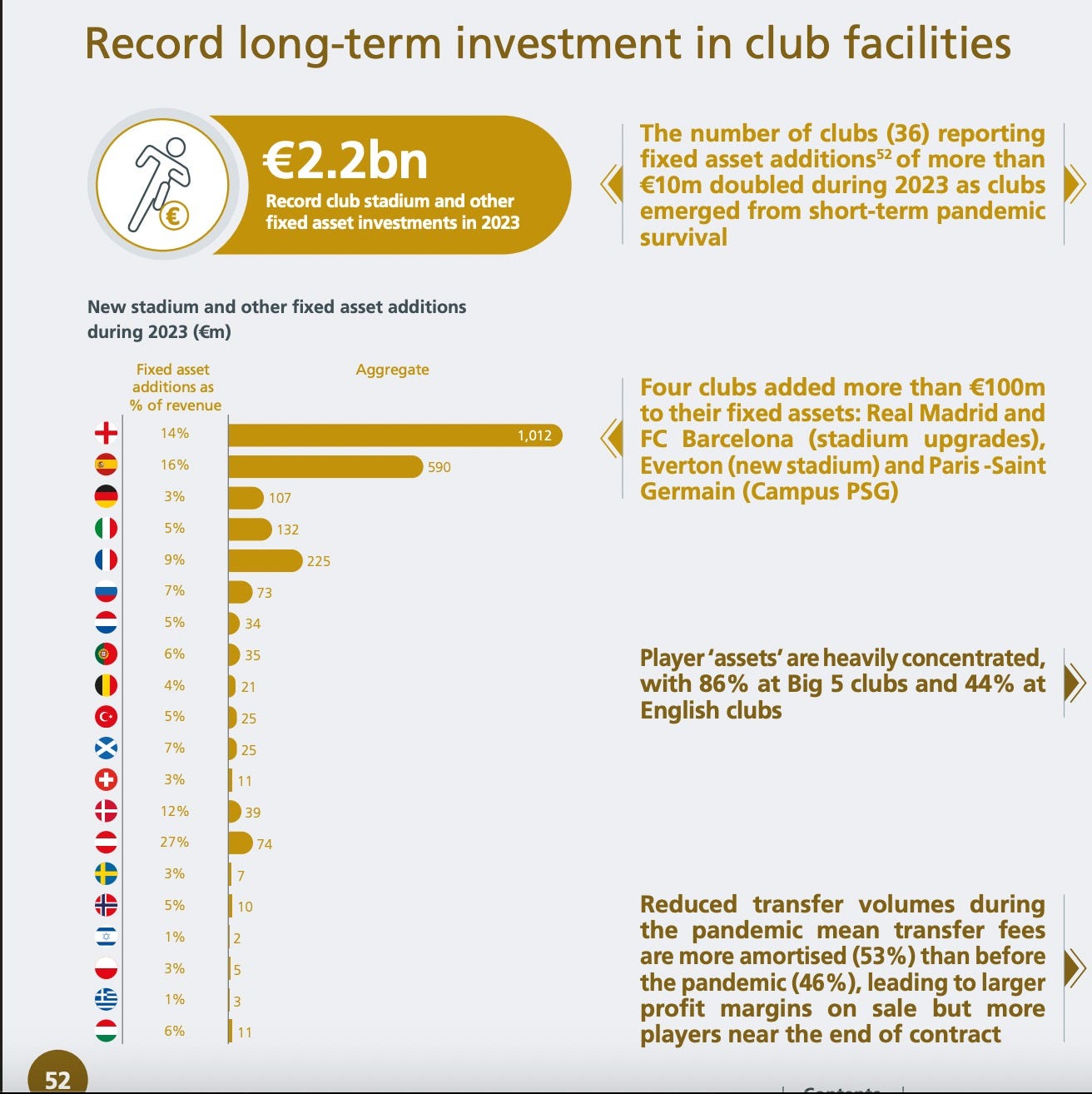
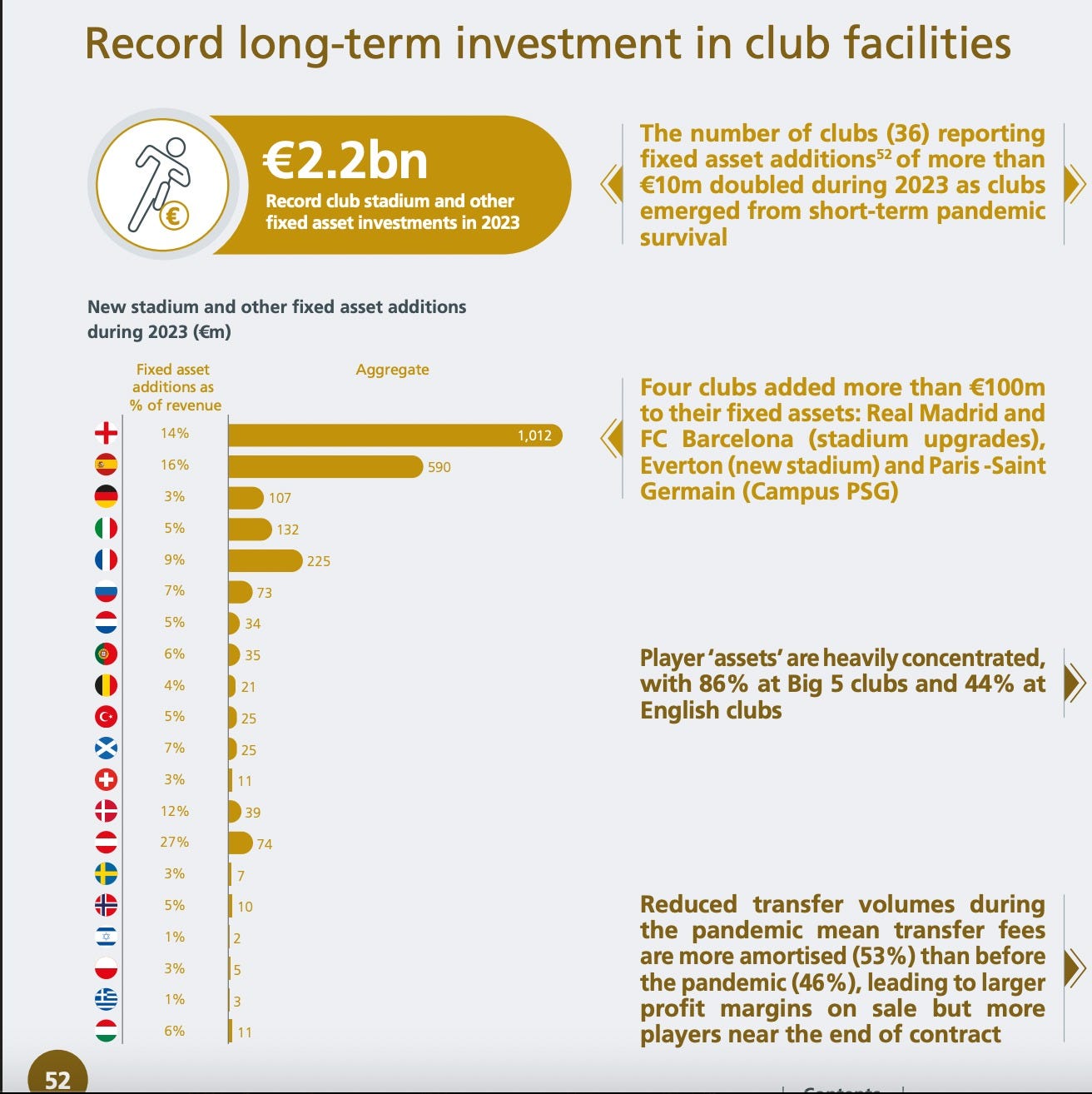
Over 2 billion euros were spent on fixed asset additions by European football clubs in 2023. (UEFA) Again, the concept is not new. For decades, stadiums have been heralded as silver bullets for community regeneration and economic growth: see any Olympic games cycle, the SoFi Stadium in Los Angeles, the Barclays Center in New York, or Michael Bloomberg’s failed plot to build a sports park in the same city, which dates back to 2002. However, there are some reasons that are driving a renewed cycle of growth and hype at the moment:
-
The commercialisation of sport, which requires greater revenues, always-on cycles and diversification.
-
Team/stadium owners’ desires to increase the returns they extract from their investments in sport, which is especially pertinent for private equity owners.
-
A boom in luxury-spending in sport, which is driving appetite for more lucrative and luxuriant experiences.
-
Economic anxiety and the downfall of commercial spaces like malls as community centres. Sports has not yet been digitalised, which makes it a safe bet for those betting on regeneration.
-
More interestingly, as Binyamin Applebaum argues in the NYT, stadiums are being built because zoning regulations in America are too strict to build anything else efficiently. Hence, they serve as omnibuses that bring with them much needed commercial and residential developments.
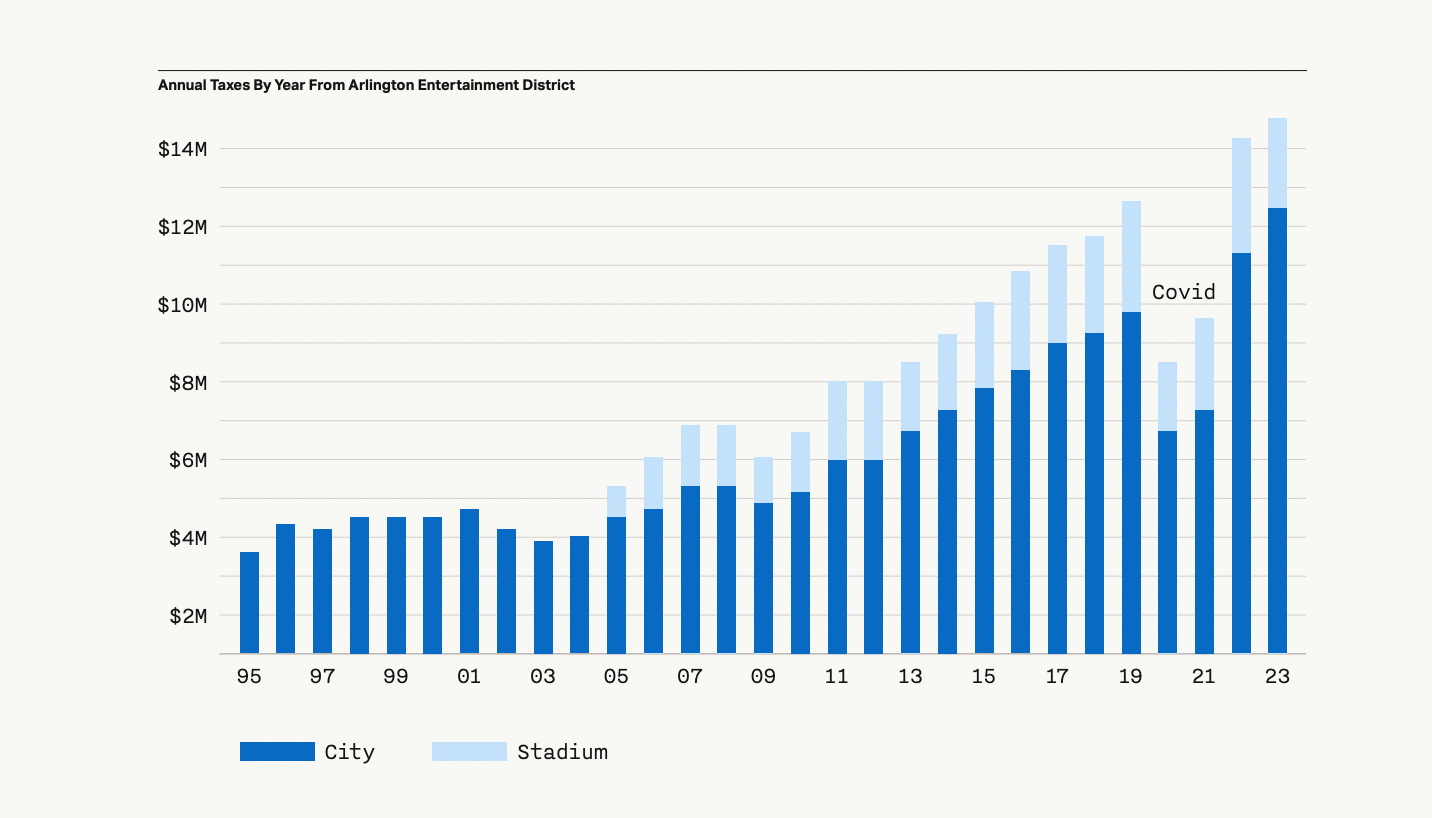
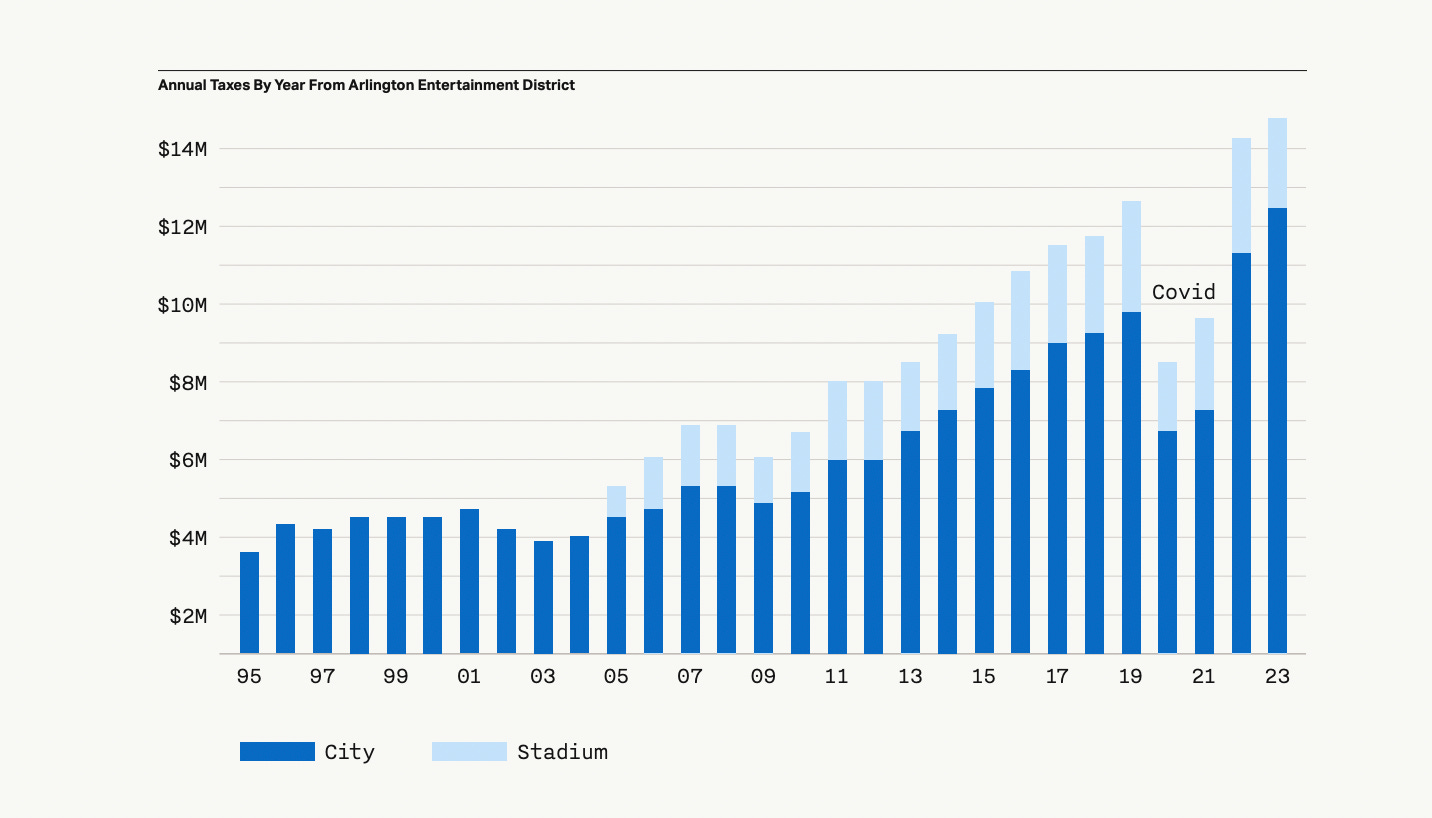
A case study from the Klutch/RBC white paper, which shows the economic impact sports/entertainment led mixed use districts can have. Around 40 new stadium projects are expected in North America over the next 15 years (Klutch/RBC) All is not rosy though, as many countries and local governments are pushing back against excessive government spending on stadium projects. Manchester Mayor Andy Burnham for example, made it clear that the city would not spend money on Manchester United’s planned new stadium, seeing it as a luxury expense. The US remains comparatively optimistic on such matters, but increasingly, large sports related projects may have to rely on more creative ways of financing, especially if the political climate of austerity continues across Europe and America.
In countries like France, Spain and Italy, private equity investments into major sports leagues could also help bring in this financing. We previously covered how much of the money injected by CVC Capital Partners into the Ligue 1 was spent on agent fees and transfers. If invested well, this capital could transform the infrastructure that underpins football in France, thus also leading to community regeneration.
📰 Read more:
-
A good primer on how European sports stadiums, particularly on the top end of the pyramid are beginning to mirror their American counterparts by becoming 24/7, mixed-use developments. (Financial Times)
-
Arctos’ blog post on how regular renovations of venues help sports properties extract more value consistently. (Arctos on Linkedin)
-
The English perspective: The hope that sports real estate projects bring to urban communities in desperate need of regeneration. (Financial Times)
-
The American perspective: How arcane American urban planning processes have led to a situation where sports stadiums are the only thing that the country can feasibly build. Zoning laws and bottlenecks are such that redevelopment projects need to be under the guise of a sports stadium to be ratified. (The New York Times)
-
A great overview on how NFL stadiums have evolved to become money making machines:
Other pieces of news that interested us:
-
Platforms like Twitch and YouTube are driving growth towards short form sports tournaments, like the Baller League and Kings League in football. Not only do these successes make us think further about the potential new competitions have, they also signal that for legacy sport, finding accessible, digital-first broadcast deals is key to survive. (Financial Times)
-
Real Madrid have been valued at $7.1 billion, far higher than any other football club. (Bloomberg)
-
Disney+ has acquired the rights to stream the UEFA Women’s Champions League across Europe; the deal includes the production of matches, as well as dedicated pre/post shows around the competition. This deal comes at a buoyant time for women’s sport; a few days ago, the WNBA’s New York Liberty raised capital at a valuation of $450 million. (The Athletic / Deadline)
-
Reliance and Star’s JioHotstar now has 280 million subscribers in India, putting it just 20 million behind Netflix’s global reach. This is largely in part to it having the rights to broadcast the IPL, India’s premier cricket league. Keep in mind that up until a few years ago, Star had the rights to the league, and the transfer of rights to Reliance’s Jio platform essentially forced Disney/Star to merge with Reliance in the country because of how devastating the user loss was. (Financial Times)
That’s all for this week! For more content, follow us on LinkedIn, and if you’re interested in learning more about us, please visit www.sportinvestmentstudio.com
-