Author: mamun

  • The state of women’s sports: An investor’s perspective.

    The Sport Investment Studio is an investment and advisory platform dedicated to transactions at the intersection of Sport, Media and Entertainment based in Paris. Visit us for more information www.sportinvestmentstudio.com

    Welcome to another edition of our newsletter on sports investment. This week, we talk about the state of women’s sport from an investor’s perspective.

    I hope this newsletter gives you some useful background, insights and ideas on sports investments trends that we identify and focus on.

    Don’t hesitate to reach out to us for more, or to share your comments


    What’s going on in women’s sport?

    Over the past year, we’ve seen some eyebrow raising investments and valuations in women’s sport, such as:

    1. A $450 million valuation for the WNBA’s New York Liberty, which came as a result of an unidentified group of investors acquiring 20% in the team.

    2. The sale of NWSL side Angel City FC to Disney CEO Bob Iger and journalist Willow Bay for $250 million, just four years after the club was formed. In June 2025, nine months after the sale, the team was valued at $280m.

    3. A $275 million valuation for the NWSL’s Kansas City Current, as reported by Forbes in June 2025. The team is co-owned by former footballer Brittany Mahomes, who is also the wife of NFL superstar Patrick Mahomes.

    4. A $265 million valuation for Chelsea FC Women, following Alexis Ohanian’s purchase of a 10 percent stake in May 2025. Ohanian is a serial investor in women’s sport, having co-founded Angel City FC, as well as Athos, a women’s only athletics event.

    These numbers have been supplemented and driven by rising interest in spectator interest and media rights values, as evidenced by:

    1. New, record breaking broadcast deals for the WNBA ($200 million per year), NWSL ($60 million per year, a 40x increase) and the WSL in England (~£13 million per year), all signed over the past year.

    2. Average attendance records being set across these leagues (48% increase in the WNBA, 14.1% for the NWSL and 41% for the WSL). Similar trends were seen in football around Europe (24% growth YoY), and also in sports such as cricket and rugby in markets like Australia and India.

    3. Record TV viewership, with over 44 million people watching women’s football in the UK, and over 54 million tuning into the WNBA in 2024.

    North America is leading the charge.

    This is not an overnight success. Decades of investment in girls’ and collegiate athletics created a deep talent-pipeline and a built-in fan base. Then, the closed, franchise-style economics of U.S. leagues bundled those athletes into scarce assets that national broadcasters could buy in a single rights package, letting revenues scale quickly.

    Europe on the other hand, lags behind. Its women’s teams grew as add-ons to century-old men’s clubs rather than as stand-alone franchises, so their finances, governance and media rights remain bundled inside larger entities. Grassroots investment has also been lacking, and the absence of an American style collegiate sports system prevents talent from developing as well as it should. Add limited stadium access, slower moves toward salary floors, and a cultural lag in recognising women’s sport as a commercial product, and Europe’s growth curve looks sluggish.
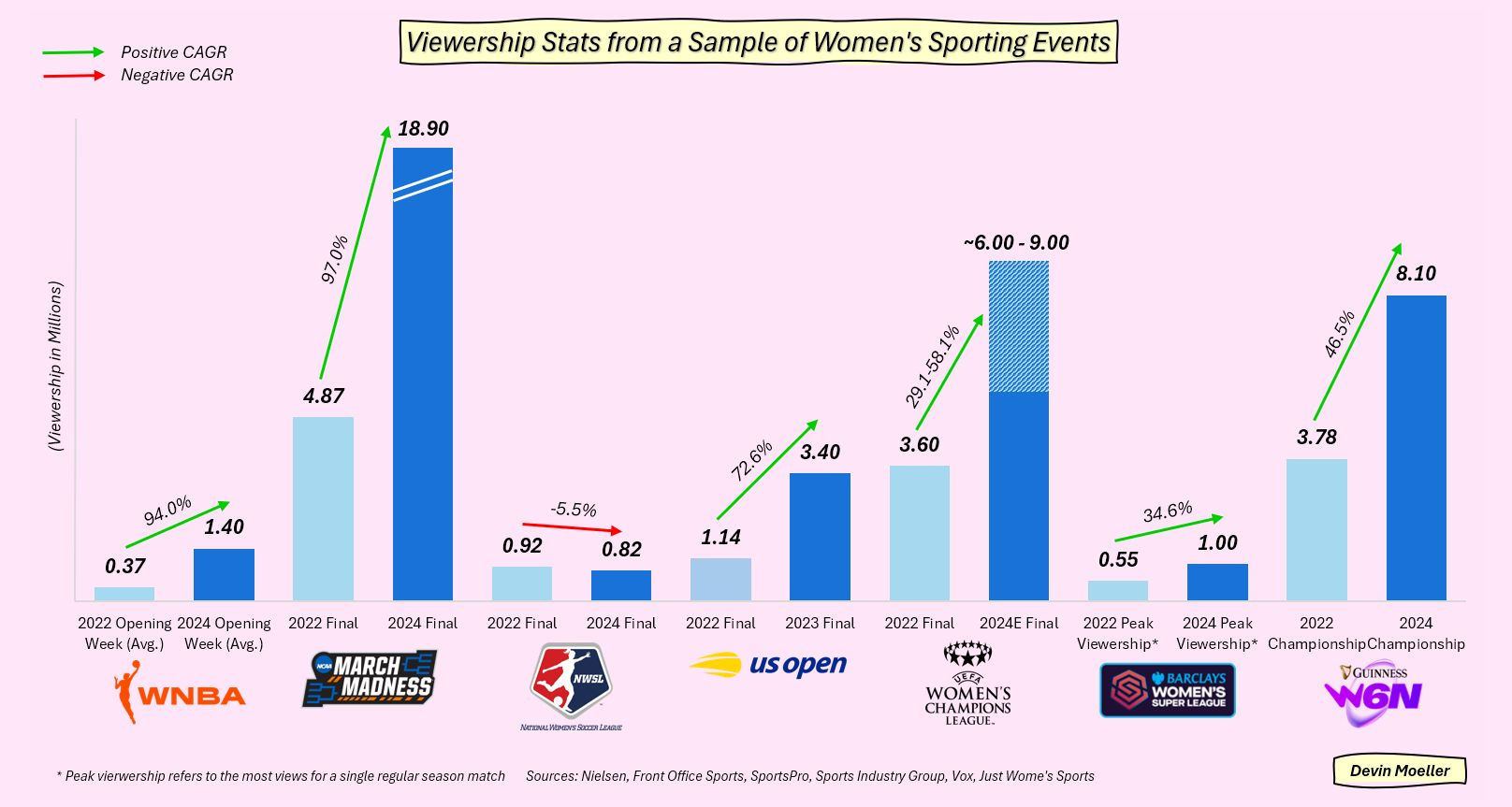
    Viewership stats from a set of key women’s sporting events across Europe and America. The trend is clearly positive, albeit the rates of growth vary vastly. (Devin Moeller of APEX Capital)

    There is also a disparity between sports when it comes to the women’s game. Sports like pickleball, athletics and tennis are already promising equal pay for male and female competitors. Due to a long history of competition, and given the pedigree of tournaments (French Open, US Open, etc.) here, these sports are better suited for scaling up women’s sport. This is driving investor interest: in 2023, CVC invested $150m in the WTA. In teams sports like football and rugby, the competitive scale is still imbalanced and relatively small; these sports also often see women’s teams as a mere extension of the men’s game.

    In women’s sport, barriers to entry persist, and there is a great disparity between leagues and geographies. The typical club in the NWSL makes around $20m a year, and the number isn’t around the same in the WNBA. The European team with the highest revenue (FC Barcelona at $19 million), makes less than half of the top revenue generating side in the NWSL.
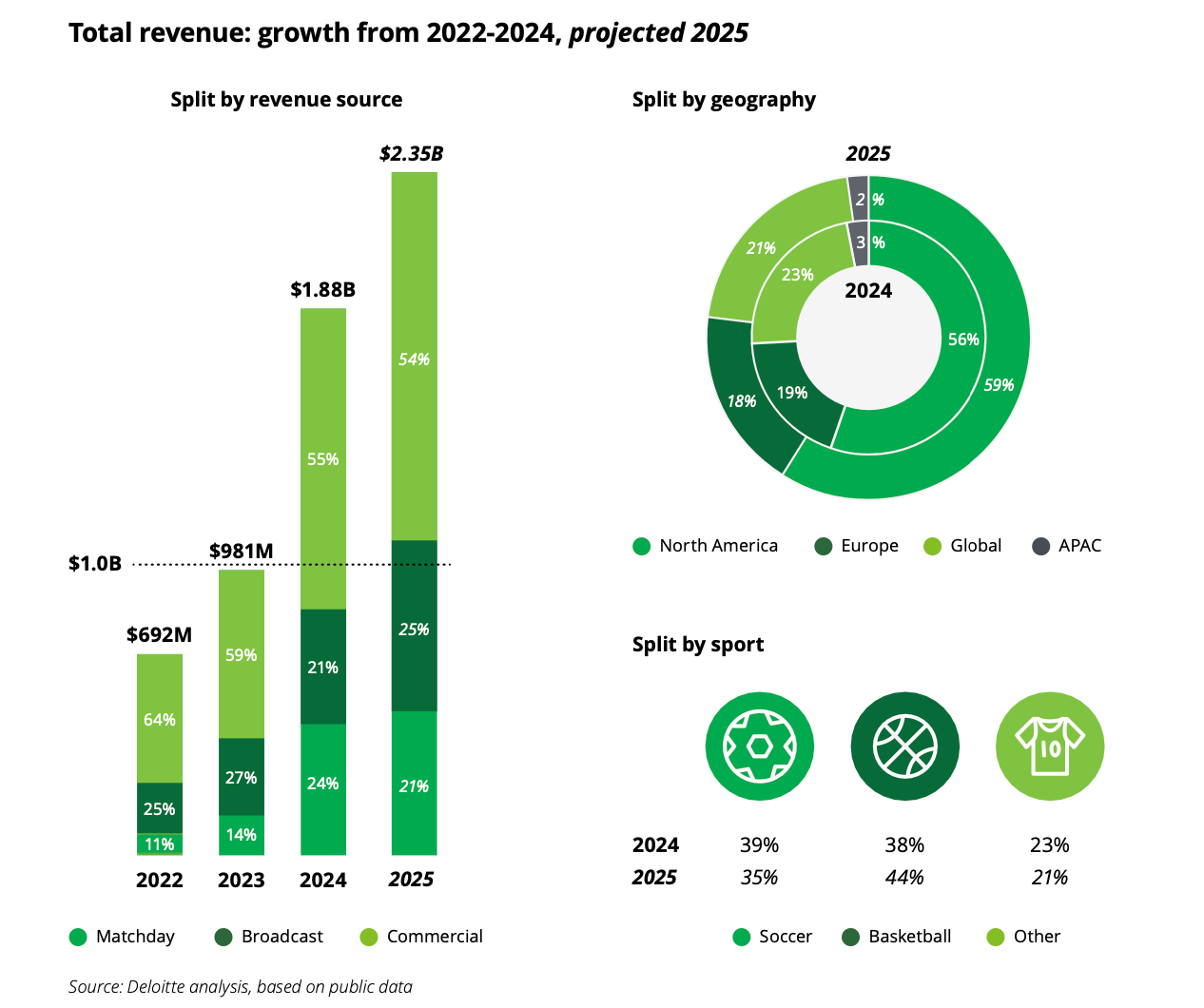
    A high level overview on rising revenues in women’s sport; basketball is projected to overtake football in 2025, largely due to the WNBA. North America remains responsible for more than half of all revenues. (Deloitte)

    What can we conclude?

    We can look to certain trends and KPIs in women’s sport, and let them guide our conclusions on the future of women’s sport as an investable proposition.

    First, it is important to create original brands. For too long, women’s teams in Europe have been appendages of men’s teams, which has stifled growth. Now, the likes of Michelle Kang (through her investments in OL Lyonnes and London City Lionesses), as well as Mercury/13 (a consortium that has pledged $100 million to buy and scale women’s clubs) are looking to change this. Kang paid €50 million deal for a 52.9 % stake in OL Féminin (now OL Lyonnes) in February 2024, while Mercury/13 purchased Serie A side FC Como Women in the same year. By creating stand-alone women’s football brands, these investors aim to push club multiples toward the 8-10× revenue levels already seen for top U.S. franchises.

    New formats for traditional sports (like Kings League/Baller League) are also disrupting the industry, with both having raised over $20m so far. Kings League now has a women’s tournament called Queens League, and as we discussed earlier, emerging sports like pickleball are leading the way when it comes to pay parity. Alongside the major leagues and teams, investors should keep an eye on these properties too as they plot their investments.

    Finally, it is important for teams and properties to invest accordingly in their social media and commercial presence. Despite being successful on the pitch, clubs like Wolfsburg (170k followers on Instagram) and Manchester United (1.1m followers on Instagram) lag behind Chelsea, Arsenal and FC Barcelona in revenues and following, largely due to how the latter set of teams have commercialised themselves. Arsenal for example, reported a 48% increase in commercial revenues YoY in 2024, and played a total of 11 games at the Emirates Stadium (6 in the previous year). Such a proactive approach is necessary if professional teams are to become investable propositions in Europe.


    📰 Read more:

    • The Athletic’s report on rising valuations in women’s sport. (The Athletic)

    • Deloitte’s primer on the state of women’s sport as of 2024, replete with information and strategies to grow the game further. (Deloitte)

    • A somewhat pessimistic take on women’s sport, particularly football in Europe. Despite soaring valuations, revenues and profits are still meek in women’s football on the continent, which puts undue pressure on the game to grow and compete with the men’s sport. (Roger Mitchell on Substack)

    • The optimist’s take: an interview with Michelle Kang, owner of the Washington Spirit (NWSL), OL Lyonnes and the London City Lionesses (WSL). Out to prove that women’s football can compete with a genuine business model, Kang discards any talk of it being just another corporate DEI project. (Forbes)

    • Women’s participation in sport is increasing, from the pitch to the boardroom. The NFL now has more women owners than ever before. (FOS)

      Sportfive’s annual report on women’s football, showcasing the increasing commercial interest in the game. Clearly, the appetite for investment is there and rising. (Sportfive)

    Other pieces of news that interested us:

    • French actor Omar Sy has become a co-owner of Paris Basketball. Sy, known for his roles in Lupin, the Intouchables, and Jurassic World joins David Kahn and Eric Schwartz at the helm of the team. (L’Equipe)

    • Wrexham AFC are looking to raise funds at a valuation of $475 million, months after reports of an already eye-watering $100 million came out. The club is now in the EFL Championship, thus being just a season away from the Premier League. (Bloomberg)

    • French telecom magnate Xavier Niel has joined forces with Iconix to submit a €60 million bid for the iconic French sportswear brand Le Coq Sportif, which is currently in receivership. A month ago, it was revealed that Niel had become the majority shareholder of US Creteil, who are in the fourth tier of French football. (Fashion Network)

    • Hashtag United, who were founded as an amateur, YouTuber led football team in 2016, have crowdfunded nearly £800,000 for a new ground for the club. The club have started from the bottom to now reach the seventh tier of English football, just three steps away from the professional game. (Hashtag United)

    • Fanatics’ Paris Saint-Germain collection show a 4,200% increase in sales after the club won the UEFA Champions League. (Globaldata)

    • The Australian SailGP has been acquired by a consortium led by Hugh Jackman and Ryan Reynolds, just weeks after Anne Hathaway was named among the acquirers of the competition’s Italian entry. The new sport of choice for the ultra-wealthy, the water-motorsport competition is attracting a lot of celebrity capital. (The Straits Times)


    That’s all for this week! For more content, follow us on LinkedIn, and if you’re interested in learning more about us, please visit www.sportinvestmentstudio.com
    Subscribe now

  • A look into the consolidation of sports agencies worldwide.

    The Sport Investment Studio is an investment and advisory platform dedicated to transactions at the intersection of Sport, Media and Entertainment based in Paris. Visit us for more information www.sportinvestmentstudio.com

    Welcome to another edition of our newsletter on sports investment. This week, we talk about how the landscape of sports intermediaries is becoming increasingly consolidated, with the world’s biggest agencies acquiring their smaller counterparts. Private equity interest in the space is also rising, thus creating a situation where certain agencies are financially pulling away from the chasing pack.

    I hope this newsletter gives you some useful background, insights and ideas on sports investments trends that we identify and focus on.

    Don’t hesitate to reach out to us for more, or to share your comments


    What’s going on?

    The biggest sports representation agencies are becoming even bigger, and private equity investors are now beginning to flood the industry with capital. Here are some recent examples of this:

    1. Wasserman has been on a spending spree, acquiring agencies in Switzerland (IFM), USA (KO Sports), Belgium (SportPlus), Ireland (Line Up) and the UK (Volante). These have deepened its talent pool further, giving it the rights to represent key athletes in these countries across football, rugby, hockey and a host of Olympic sports. In 2022, Providence Equity had taken a minority stake in Wasserman.

    2. Bruin Capital led a four way merger of agencies in 2024, combining them to create AS1, which now represents nearly 300 footballers worldwide. The enterprise value, at the time of acquisition was $310mn.

    3. CAA Sports acquired Portas Consulting a couple of months ago, thus expanding to include sports consulting services under its umbrella. A leading player in the Middle East, Portas has been instrumental in assisting with the ideas that Saudi Arabia and the UAE have plotted in sport over the past decade. CAA’s case is particularly interesting and concentric. The Pinault family acquired a majority stake in it last year, not long after it had bought ICM, which itself had purchased Stellar Group, a major name in football representation.

    4. Klutch Sports bought Rep 1 Baseball in 2023, before acquiring European football agency ROOF less than six months later.

    5. Velocity Capital injected £100m in Unique Sports Group earlier this year, while Hollywood talent agency Gersh expanded into sports by acquiring Spanish agency You First.

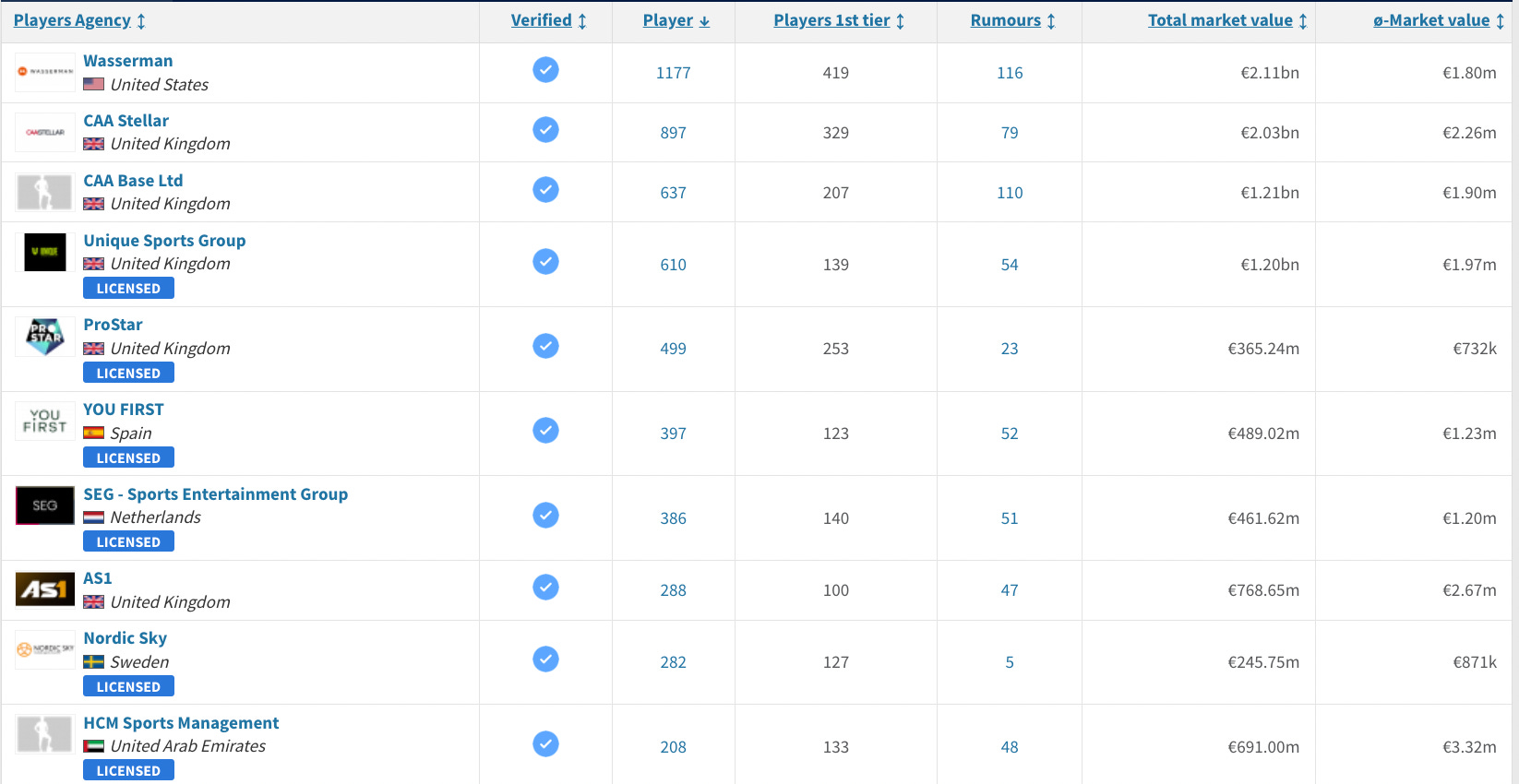
      The ten biggest football agencies in the world now manage over 5,000 players, with a combined estimated market value of their players amounting to billions of euros. (Transfermarkt).

    Why is this happening?

    1. The industry is marked by predictable, stable and high cash flows that come as a result of minimal investment. Even aside from transfer windows, agencies earn commissions on commercial rights and contract renewals, thus making them irreplaceable in modern sport. With agency fees amounting to 7-8% of deal value, and with billions being spent on transfers and contracts every year, private investors are seeing an easy way to make money.

    2. The representation business is now far more professional and diverse than it used to be. With players being exposed to new commercial opportunities (like bespoke documentaries), data-driven contract negotiations and the possibility of becoming investors themselves, the level of service demanded is high. Thus, agencies need to diversify and consolidate their offerings as much as possible.

    3. With more money on the table than ever before, both clubs and players need reliable agents to negotiate a fair deal. FIFA is also cracking down on dodgy agent behaviour, having mandated higher barriers to entry for intermediaries. In such a landscape, large agencies are able to provide greater levels of trust. The size of their apparatus also allows them to spread compliance costs across a wider base, something that smaller setups may not be able to afford.

    4. As new geographies (Middle East for football and motorsport, Europe for American football and basketball, USA for cricket) emerge, agencies need to have a global footprint to meet the needs of rightsholders, players and teams. This explains why CAA is investing in a sports consultancy in the Middle East, and why Wasserman has been aggressively expanding in Europe.

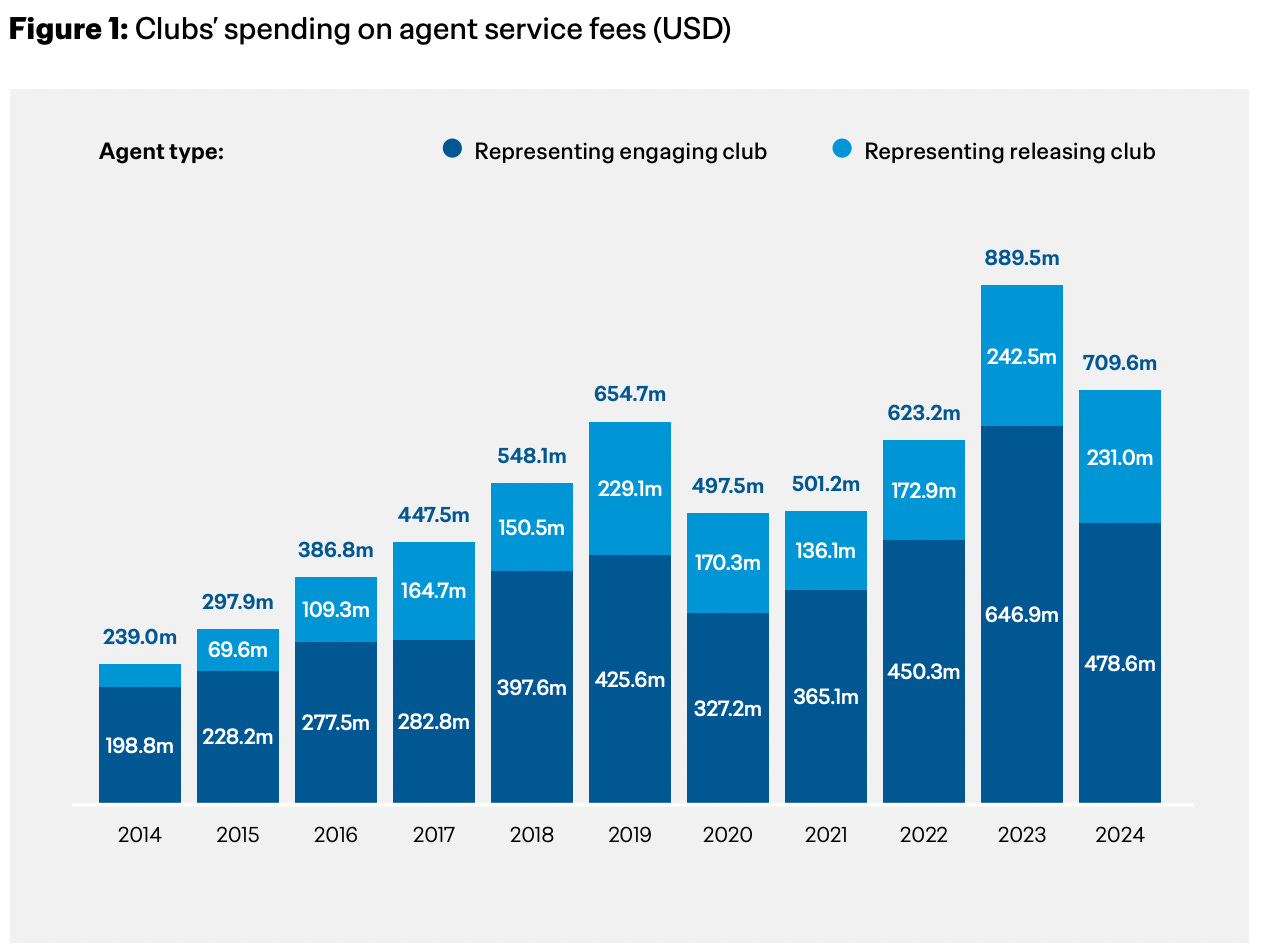
    Intermediary fees are stable and in the medium term, have shown strong growth, particularly in world football. According to FIFA’s annual report on agent activity in 2024, service fees, on average amount to 8-9% of the total transfer fee.

    What comes next?

    • As the market for major sports and leagues becomes concentrated, agencies will begin focusing on emerging domains. Wasserman recently acquired Volante Sports, which is a women’s football agency, and groups like USG and Octagon are expanding their base of talent in cricket, hockey and rugby. As revenues and commercial opportunities in new sports like pickleball and padel increase, we can expect agencies to begin snapping up the finest talents within them.

    • Exit windows are opening, and at least one super-agency is likely to test public markets. Excel Sports has hired Moelis to canvas buyers at an estimated US $1.6-2 bn valuation, and as a wave of PE exits beckons in the next few years, agencies like CAA and Wasserman may be tempted to go public.

    • Revenue diversification will accelerate. Agencies are already moving beyond straight contract commissions into venture capital, data and content. Wasserman launched a venture arm to take equity in sports-tech start-ups, and was also appointed as the global sales agent for WTA Ventures, thus becoming a rightsholder in its own capacity. CAA has a similar property, Connect Ventures, which it operates with venture capital firm NEA.


    📰 Read more:

    • The FT’s piece on how big agencies are becoming bigger, with more insight on how private equity is reshaping the representation landscape in professional sport. (Financial Times)

    • FIFA’s annual report on agent activity in football. (FIFA)


    Other pieces of news that interested us:

    • An interview with the All England Lawn Tennis Club’s CEO, Sally Bolton, on how Wimbledon is trying to stay at the pinnacle of sports entertainment in an ever-saturated landscape. (Financial Times)

    • Velocity Capital Management has partnered with Elevate and the Texas Permanent School Fund Corporation to launch a $500m fund targeting commercial and infrastructure investments across US college sports. (PE-Insights)

    • Como 1907 have launched SENT Tourism, a subsidiary that shall package matchday experiences into luxury tourism opportunities. (Como 1907)

    • FIFA are struggling to sell tickets for the Club World Cup in America, which will have kicked off by the time you’re reading this. (Associated Press)


    That’s all for this week! For more content, follow us on LinkedIn, and if you’re interested in learning more about us, please visit www.sportinvestmentstudio.com

    Subscribe now

  • Alternative sports leagues: the future of the industry, or just another trend?

    The Sport Investment Studio is an investment and advisory platform dedicated to transactions at the intersection of Sport, Media and Entertainment based in Paris. Visit us for more information www.sportinvestmentstudio.com

    Welcome to another edition of our newsletter on sports investment. This week, we talk about how new formats and alternative leagues are changing the dynamics of many of the world’s major sports, including football, golf, cricket and volleyball.

    We hope this newsletter gives you some useful background, insights and ideas on sports investments trends that we identify and focus on.

    Don’t hesitate to reach out to us for more, or to share your comments


    What’s going on?

    Shorter and more entertainment focussed formats are coming up in nearly all major sports, thus threatening the existing status quo. These formats claim to be built for the new generation of sports fans, who according to research, have attention spans of just eight seconds, yet remain committed to watching sport as much as their older counterparts. Gen-Z fans still spend an average of 3 hours 36 minutes a week watching sport, however their consumption habits are quite different. 10% of Gen Z fans only watch highlights, and the bulk of their viewing takes place on OTT platforms.

    Thus, a new generation of alternative sports leagues are building for this exact crowd. Some of the most notable such formats/competitions are:

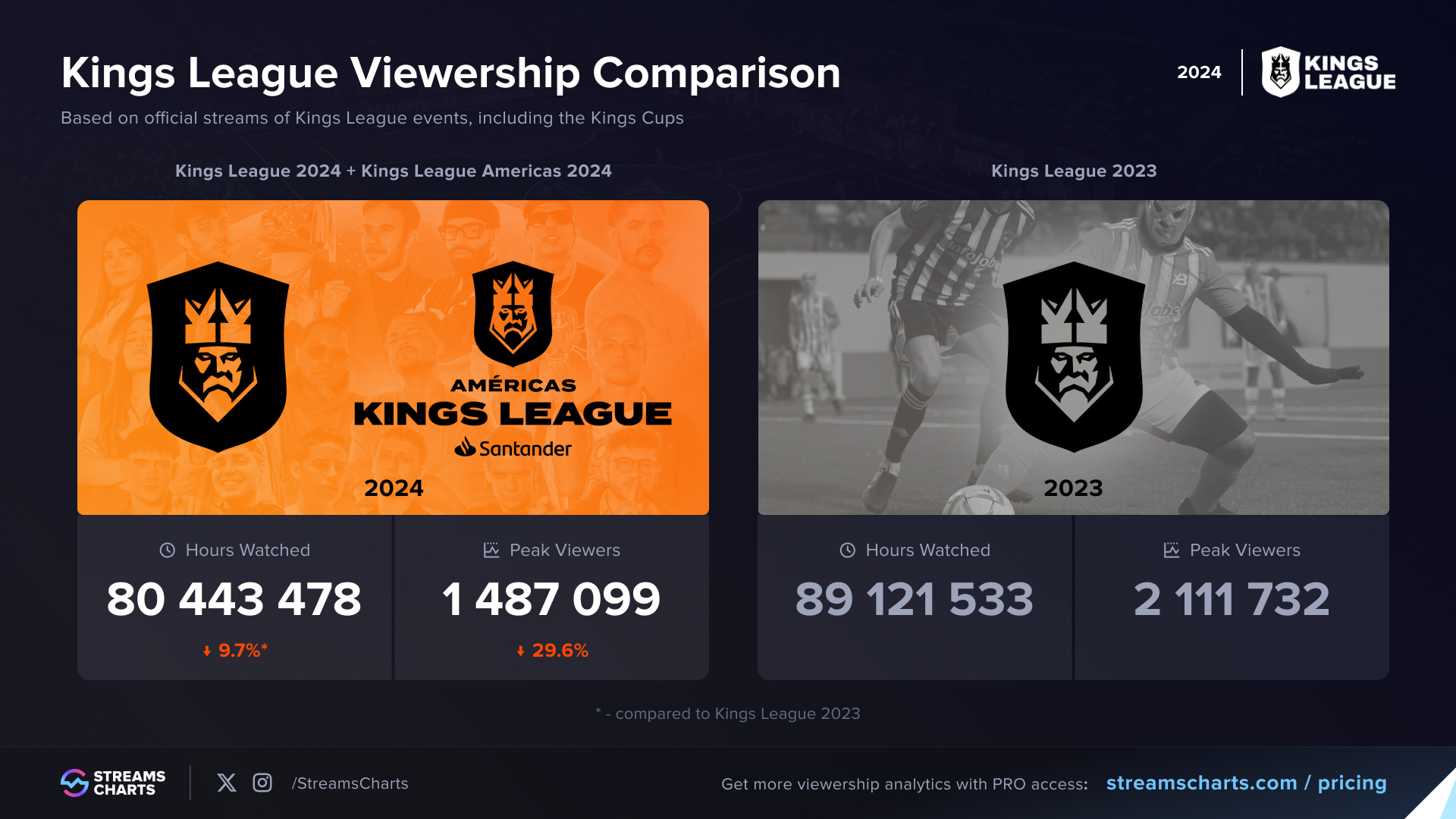
    1. Baller League/Kings League (football): Short form football leagues with 6/7 players a side, 30 minute matches, and a set of gamified rules that add additional jeopardy to each game. Both leagues are driven by streamer, creators and current or former athletes, who double up as players and owners. Kings League, founded by Gerard Pique, €20M in 2023, peaked at concurrent 800k viewers, and hits markets across Europe and Latin America. Baller League drew 71k+ Twitch peak viewers day‑one, boasts a million social followers, and raised $25m to expand into the UK/US.

    2. The Hundred/T10 (cricket): The Hundred squeezes each innings into 100 balls instead of T20’s 120, pairs men’s and women’s games in the same slot, and has already sold £520m of equity that pegs its eight city franchises at about £975m. The league’s 2024 men’s final peaked at 1.3 million BBC viewers and seasons shift roughly half-a-million tickets. Concurrently, upstart leagues in the Middle East, such as the Abu Dhabi T10 are creating even shorter, 10-over, 90-minute games. The league pulled 342 million global viewers in 2024.

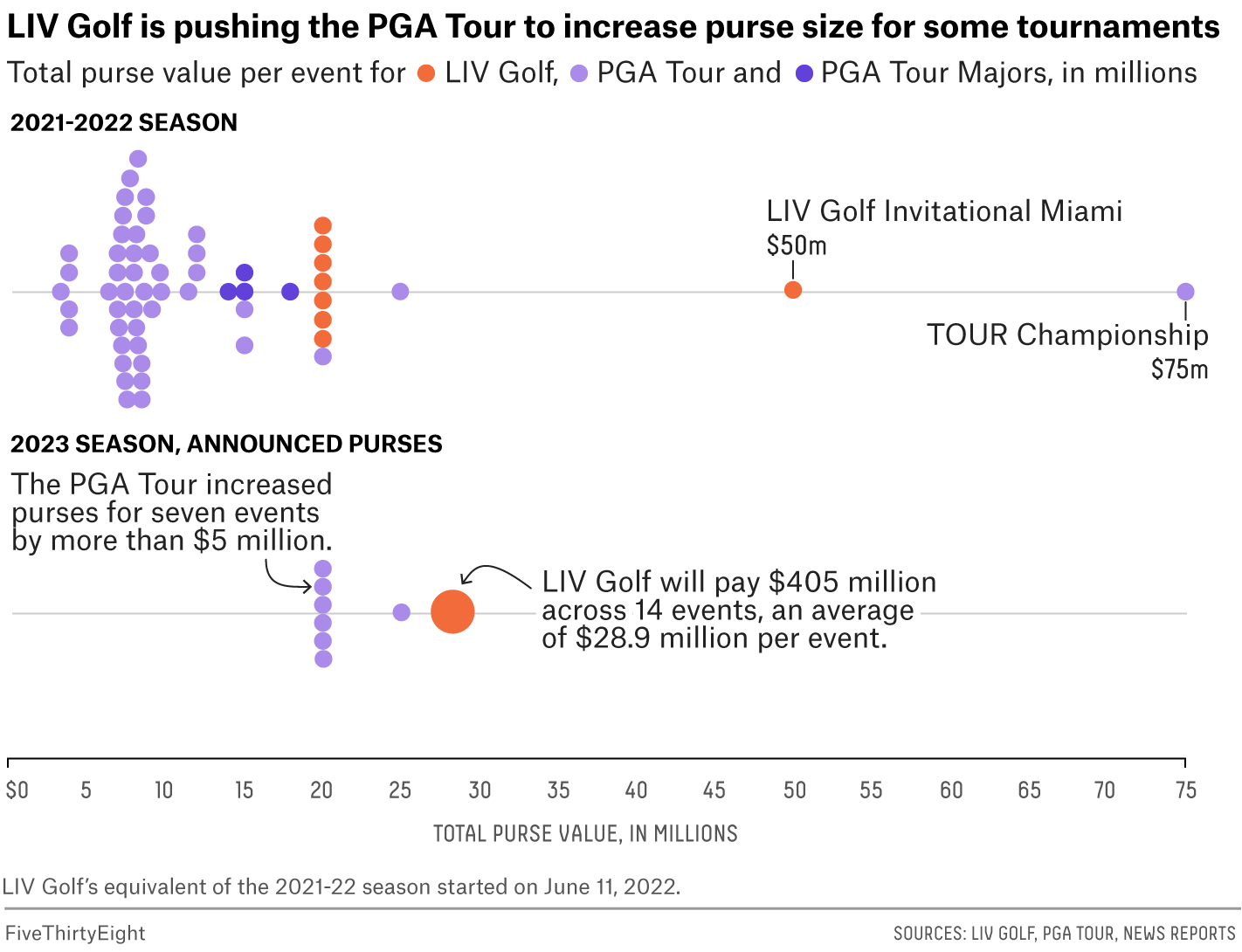
    3. LIV Golf/TGL (golf): LIV Golf is the 54-hole, team-scored tour bankrolled by Saudi Arabia’s Public Investment Fund, which has poured almost US $5 billion into the project. On the other hand, a star-studded lineup including Tiger Woods, Rory McIlroy, FSG, and David Blitzer is pushing TGL. The league re-imagines golf as a two-hour arena show with a shot clock and six city-based teams of PGA stars. Valued at ≈US $500 million before a single swing, its ESPN debut averaged 919k and peaked at 1.1 million viewers.

    4. LOVB (volleyball): A new U.S. women’s indoor league that debuted in January 2025 with six city-based teams. It layers a 66-club, 16 000-athlete youth system under the same brand, creating a full “club-to-pro” pathway. Investors Atwater Capital, Ares and Left Lane have pumped US $160 million into the project, and ESPN carries 28 matches nationwide.

    The Kings League, founded by Gerard Pique, has led the way when it comes to football’s new leagues. (Streams Charts)

    What makes these leagues special?

    At their core, these formats and others like them promise a more compact, fast paced and entertaining version of the sport they represent. However, there are a number of other key commonalities among these leagues.

    1. Focus on casuals: Believing that Gen Z has reduced attention spans which make traditional sports too long for them, these leagues are creating hyper-stimulating, short-form formats. Abu Dhabi T10 wraps an entire cricket match into 90 minutes, while Kings League’s influencer-owned 7-a-side games last 40 minutes yet still draw 24.8 million hours watched. Gamified twists like power-ups, and live fan polls keep the action interactive. Many key characters in these leagues are also streamers, actors and other entertainers that may not have their roots in sport. Thus, these formats often serve as congregation points for streamer audiences, as opposed to outright sporting events.

    2. Creative broadcast modes: These leagues are creative in both how and where they show their product. For example, TGL’s arena uses a giant simulator, movable greens, hot-mics and a 40-second shot-clock, providing an experience that has been yet unseen in golf. Baller League UK secured traditional broadcast deals with Sky, while also showcasing itself on Twitch and YouTube worldwide, thus giving it unparalleled reach. The broadcast experience for most traditional sports leagues has remained functionally and visibly similar for around two decades now, while restrictive rights deals often arrest the potential leagues hold to display their own highlights and games.

    3. Heavy private money from day one: Saudi PIF has injected almost $5bn into LIV, The Hundred’s equity sale values its eight teams £1.2 bn, LOVB has banked $160m pre-kick-off, and both Baller and Kings League have secured private equity investments. This capital allows them to expand and innovate on their product with lots of operational freedom, which is something that legacy sports properties envy.

    4. Built-in inclusivity: The focus on young audiences, as well as the lack of administrative red tape and historical baggage makes it easier for these formats to be inclusive. In The Hundred for example, women’s and men’s fixtures are scheduled back-to-back, while the Kings League’s sister competition, Queens League, is treated as an integral part of the same ecosystem. Combine this with accessible and youth driven marketing, and you get a situation where the next generation of female players see these leagues as their primary reference point for sport.

      Due to a level of capital that was previously unheard of in golf, LIV Golf changed the finances of the entire sport, leading to a mass exodus of players from the PGA Tour and an increase in prize money across the board. (538)

    What comes next?

    The key question here is: will these formats pose an existential threat to existing hierarchies in sport, or will they simply serve as appendages to them? The answer depends on things such as the sport in question, the amount of money that these leagues have at their disposal, and also on whether they can sustain themselves in the long run. However, we can identify some key trends:

    1. Coexistence over domination: Golf is already showing the path here. The PGA Tour has spun off the $3 billion for-profit PGA Tour Enterprises and continues to haggle over a separate Saudi PIF investment that would keep LIV’s team events on the calendar. LIV, for its part, is cementing leverage by adding first-time stops in South Korea, Hong Kong and Indiana for 2025. A blended “world tour” that shares players and broadcast windows now looks more plausible than outright domination of one particular tour.

    2. Co-opting and collaborating with new formats: Traditional football brands are beginning to treat Kings League as a opportunity, not a threat. Olympique de Marseille has lent colours and content support to Wolf Pack FC in Kings League France, while Juventus has aligned with Zebras FC for the Italian edition. With Kings League World Cups landing in Paris and Brazil, and Baller League rolling out in the UK and eyeing the U.S., such partnerships will only multiply.

    3. Filling the gap in the calendar: Sports that leave long off-seasons are spawning parallel circuits rather than losing eyeballs to Netflix. Ice Cube’s BIG3 basketball league occupies NBA arenas every July–August, while LOVB’s Omaha Supernovas average ≈11,000 fans and Spurs Sports & Entertainment just bought into a new Austin team in the league. Arena owners now see these properties as revenue bridges, and athletes gain year-round earning options.

    4. Short-form leagues as R&D labs: Cricket boards too, are co-opting shorter leagues and testing new innovations in them. The Hundred gives local cricket clubs a cash lifeline while leaving other formats untouched, and it will trial crowd-mic’d time-outs and dynamic graphics that could become mainstream. Meanwhile, at least two ICC full members are lobbying for T10 to receive official status, positioning the 90-minute format as an Olympic-ready pilot. Expect federations to license or co-own these new products to court casual fans and try out new ideas, across sports.


    📰 Read more:

    • A critical take on Baller League, in particular its UK expansion. (Jordan Wise on Substack)

    • The FT’s piece on how digital platforms are facilitating the rise of leagues such as Kings League and Baller League. (Financial Times)

    • A look into the experience that Baller League offers, and how that’s catching the eye of traditional footballing entities. (Reuters)

    • ESPN’s overview on The Hundred, and the near-billion pound valuation that its teams have raised this year. (ESPN)

    • Despite nearly $5bn in investment from the Saudi PIF, LIV Golf is rapidly losing money, which puts its future in doubt. (Reuters)

    • An explainer on the TGL. (SportsPro)

    • Sports Business Journal’s primer on LOVB and how it is changing volleyball. (SBJ)


    Other pieces of news that interested us:

    • Kevin Durant’s Boardroom has signed a partnership with the Qatar Sports Investments. As part of the deal, Durant will become a minority shareholder in Paris Saint-Germain. (QSI)

    • The Buss family, which has owned the Los Angeles Lakers since 1979, is now selling the franchise to Mark Walter’s TWG Global holding company. Purchased for $67.5 million, the Lakers will now sell at a valuation of $10 billion, a record in professional sport. (ESPN)

    • The NFL has extended its deal with Genius Sports to provide official play-by-play statistics that power the league’s betting and media feeds. (Genius Sports)

    • English side Crystal Palace, co-owned by American investor John Textor’s Eagle Football Holdings, have been embroiled in a saga relating to UEFA’s multi-club ownership rules. As Textor-owned Lyon are also in next season’s Europa League, Palace are being threatened with a ban from the competition, which does not allow two teams with the same owner to compete. Textor has now sold his shares to New York Jets’ owner Woody Johnson in a deal worth more than £190m. (The Guardian / Bloomberg).

    • A new, jiu-jitsu league called the Professional Grappling Federation has sold its first team for a reported seven figure amount. The buyer is Kevin Lucas, founder of health platform New Hope Regeneration. (PR Newswire)

    • The Fenway Sports Group is still looking to build out a multi-club platform in football, and is now eyeing La Liga team Getafe. They were previously rumoured to have been in serious talks with Malaga, Bordeaux and Toulouse. (beIN)

    • Ares has acquired a stake in the French Sail GP Team, of which Kylian Mbappe is also a co-owner. (Ares)


    That’s all for this week! For more content, follow us on LinkedIn, and if you’re interested in learning more about us, please visit www.sportinvestmentstudio.com


    Subscribe now